Skip to content
Slovenski šolski muzej

Library of educational resources

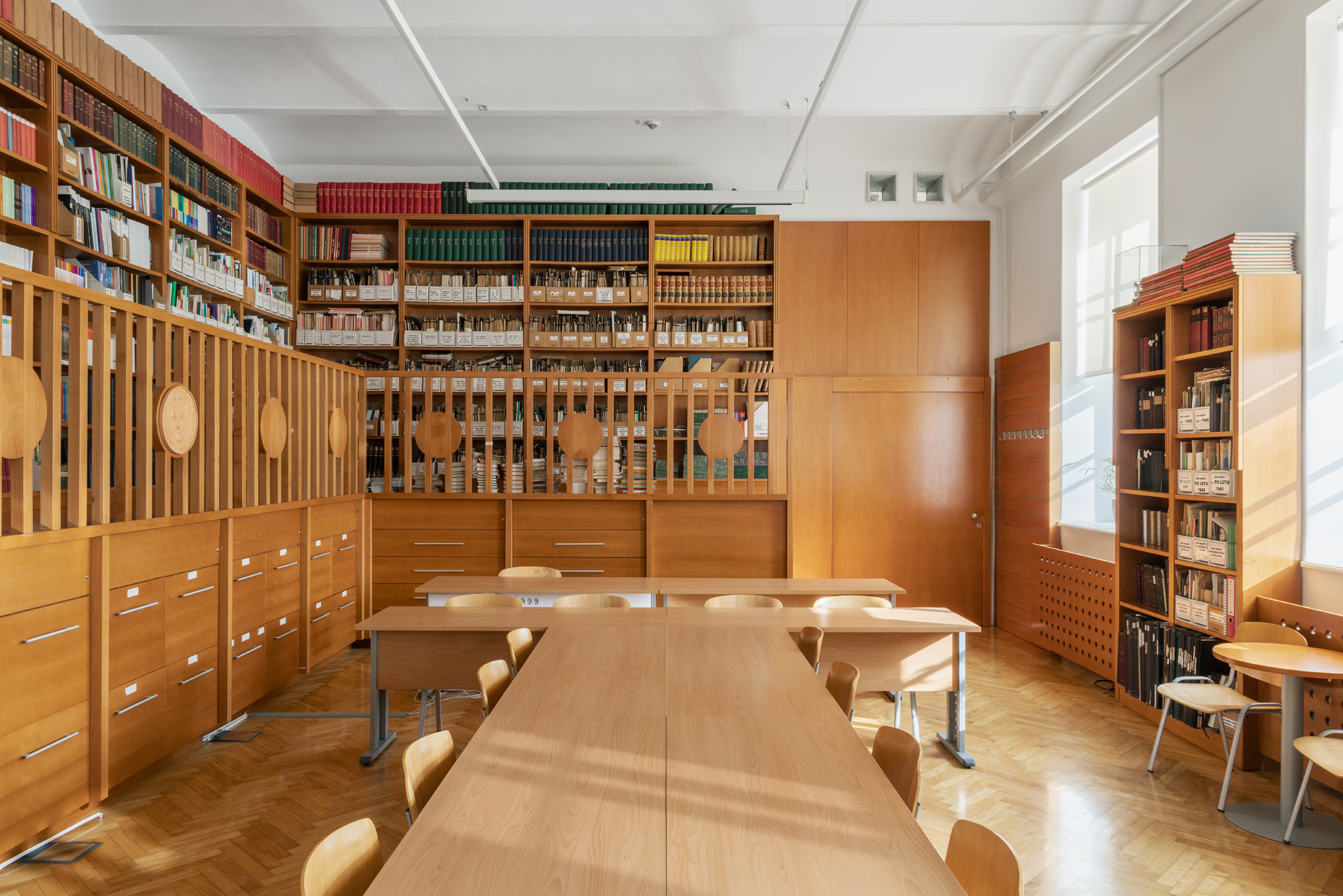
The Slovenian School Museum Library seeks to build, develop and preserve a specialised library collection on the history of education in Slovenia. The library processes the material professionally and ensures its accessibility and use. It provides support for the work and educational processes of employees of the Slovenian School Museum and the interested segments of the public.

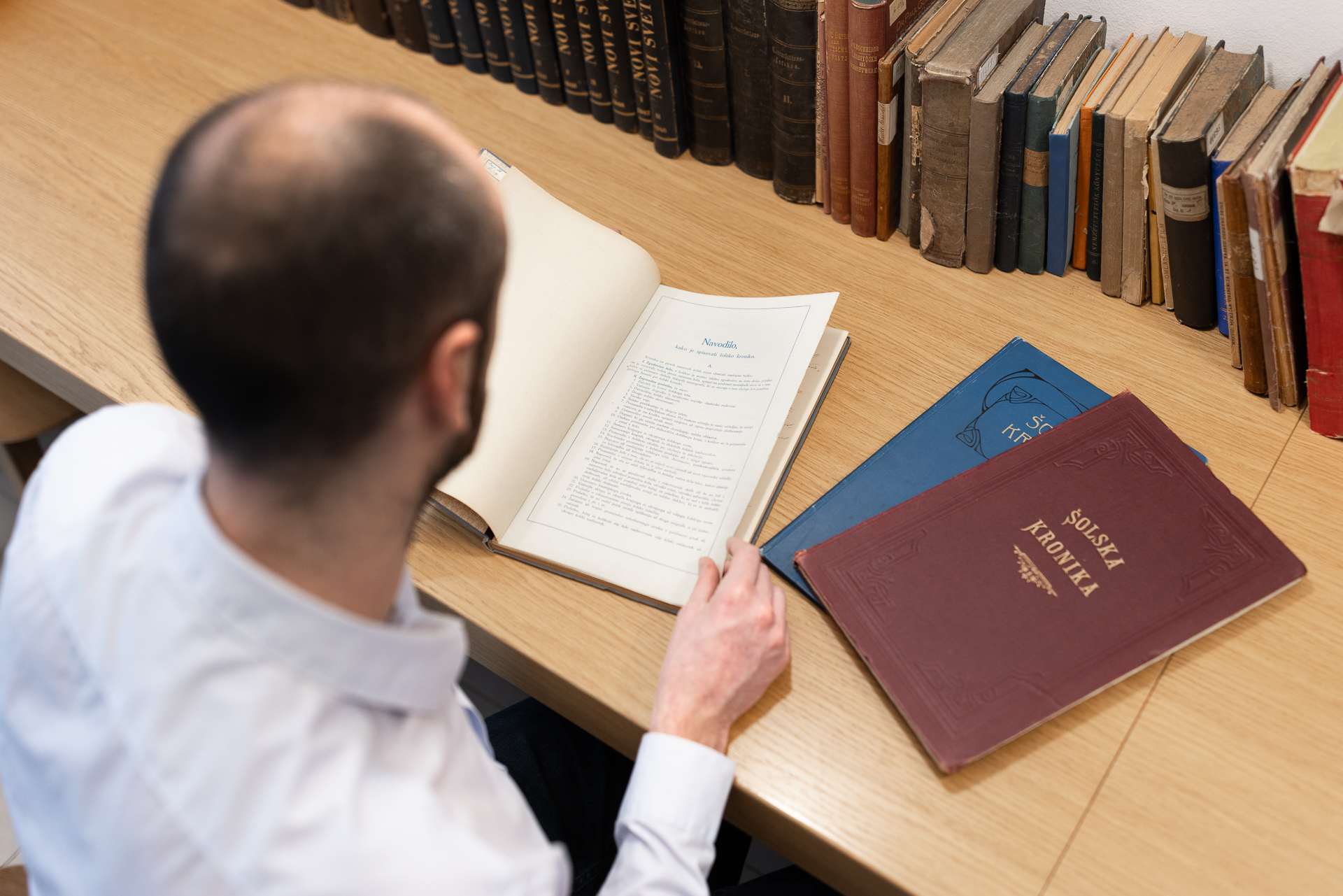
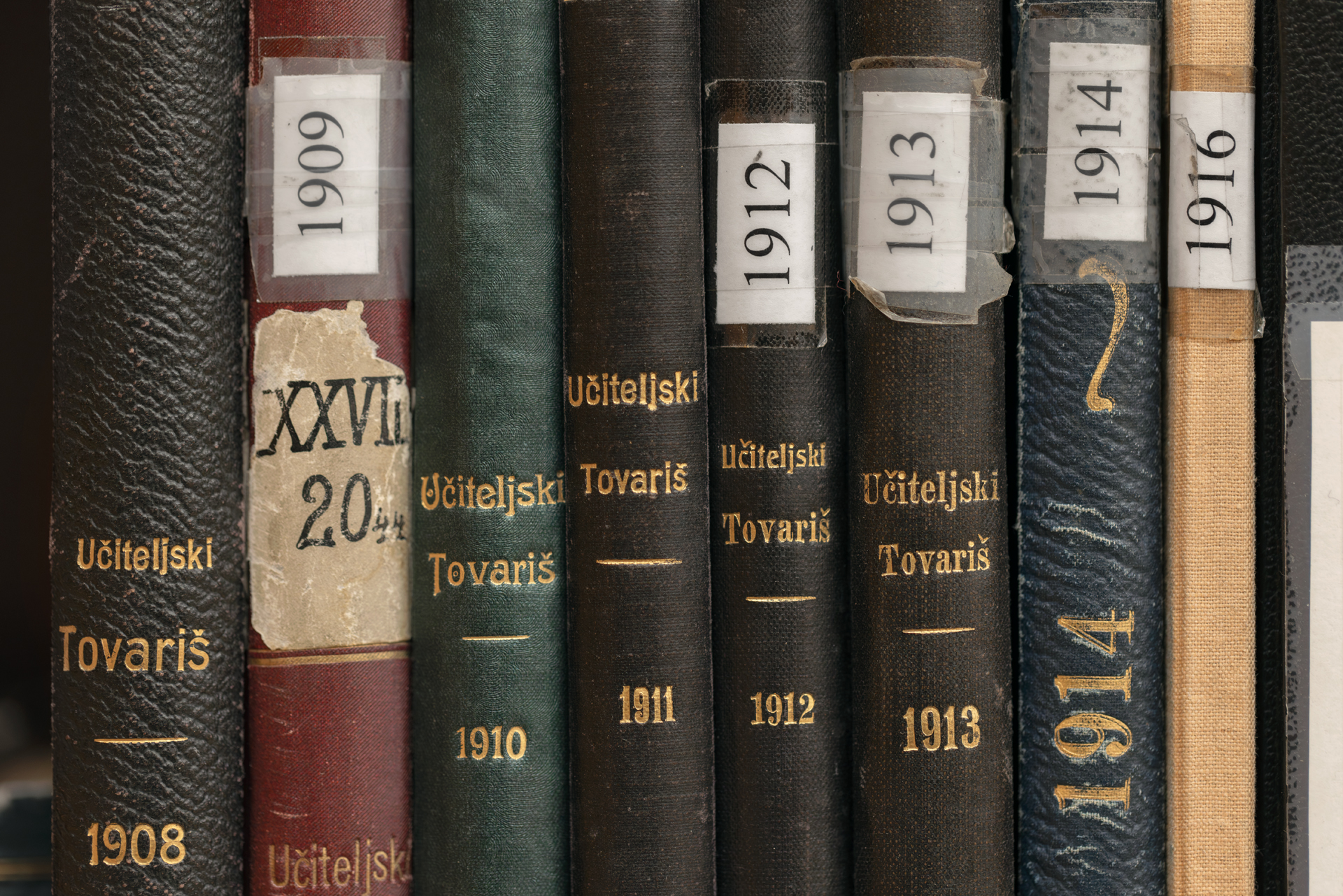
The specialist literature on the history of education comprises mainly textbooks, both older and contemporary editions of specialist educational publications, youth publications, and literature broadly related to education, history or museology. Special collections within the library include a collection of textbooks, a collection of curricula and a collection of school literary journals.
Opening hours

Monday to Friday, 9:00–13:00.
To make an appointment outside of the opening hours or to request information about the material, please email 
polona.kozelj@solskimuzej.si or call: +386 1 25 13 163.

The Slovenian School Museum Library is registered with the libraries register and included in the COBISS system.
Library history

The history of the Slovenian School Museum Library dates back to 1855, when three dedicated teachers, Andrej Praprotnik, Leopold Belar and Jožef Fajfar, agreed to establish the Teachers’ Reading Room, where they would be able to borrow books from each other and purchase new ones with funds from membership fees. Books were hard to come by at the time, and dedicated teachers often prioritised acquiring new knowledge and committing to their profession over even the most basic life necessities.

Following the establishment of the Teachers’ Society for Carniola in 1869, the library came under the administration of the Society. When the School Museum was founded in 1898, the Slovenian Teachers’ Association donated its books to the museum. This collection of books was divided between the Association of Educational Societies and the Ljubljana Teachers’ Society when the museum was temporarily dissolved in 1910. However, the collection found its way back to the library of the Slovenian School Museum in the following decades. As the museum moved several times, and the library with it, the original collection was not fully preserved. Today, the library collection contains more than 60,000 items.

The oldest book in our library

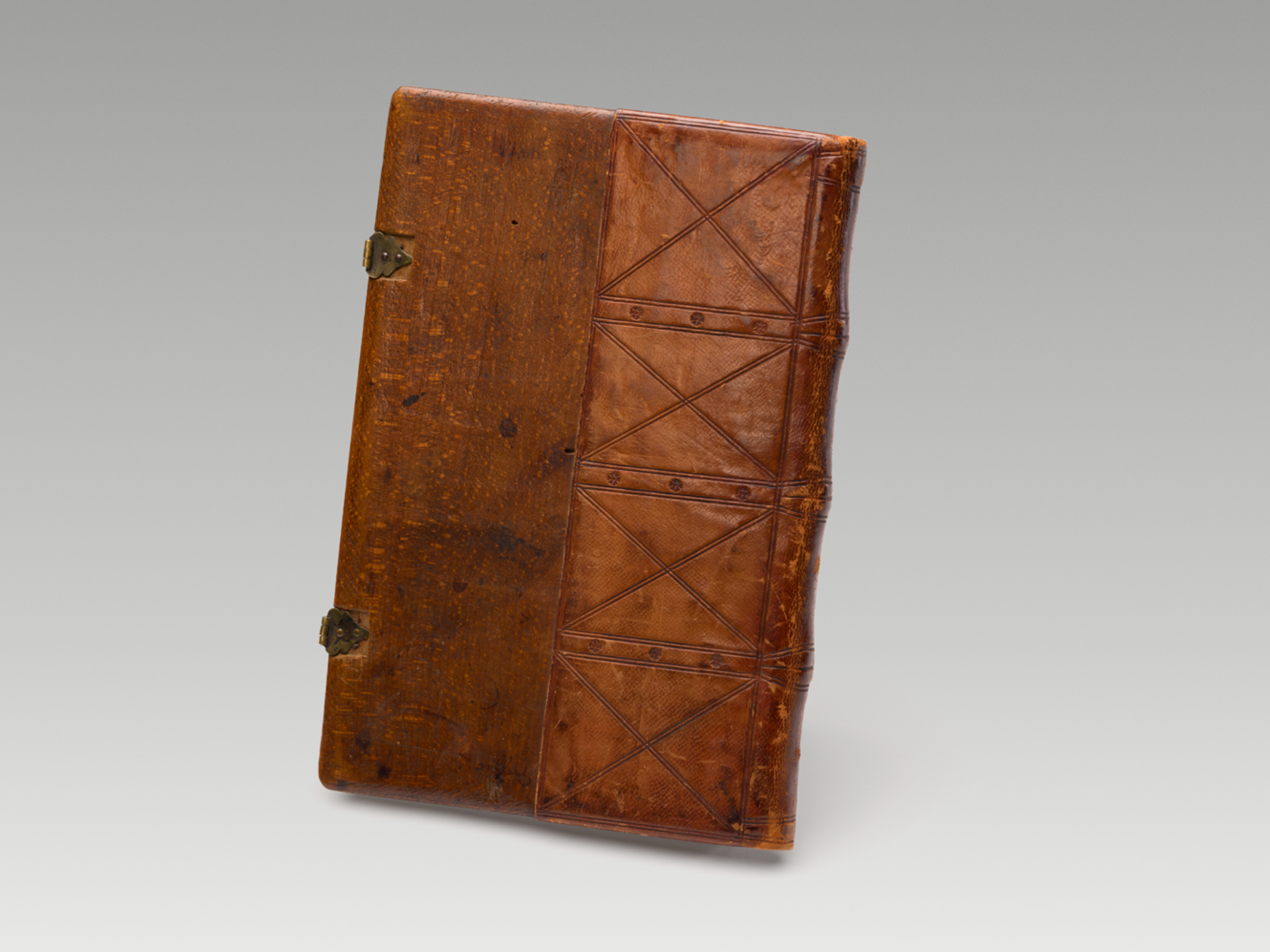
The oldest book in our library is the textbook Rudimenta grammatices, the basics of Latin grammar. Written by Nicolaus Perottus in 1468, it is considered an incunabulum. This term refers to books printed before the start of the 16th century.


Library users

The specialised library of the Slovenian School Museum primarily supports the information needs of the museum staff. Through its selection of works, it provides a foundation for the study of the history of schools. The material is also available to external users for use in the reading room. Most of these users are students, professors and researchers, as well as individuals who come to our library to reminisce about their school days. Visitors are required to fill out a form to gain access to library materials, archives, and documentation collections.

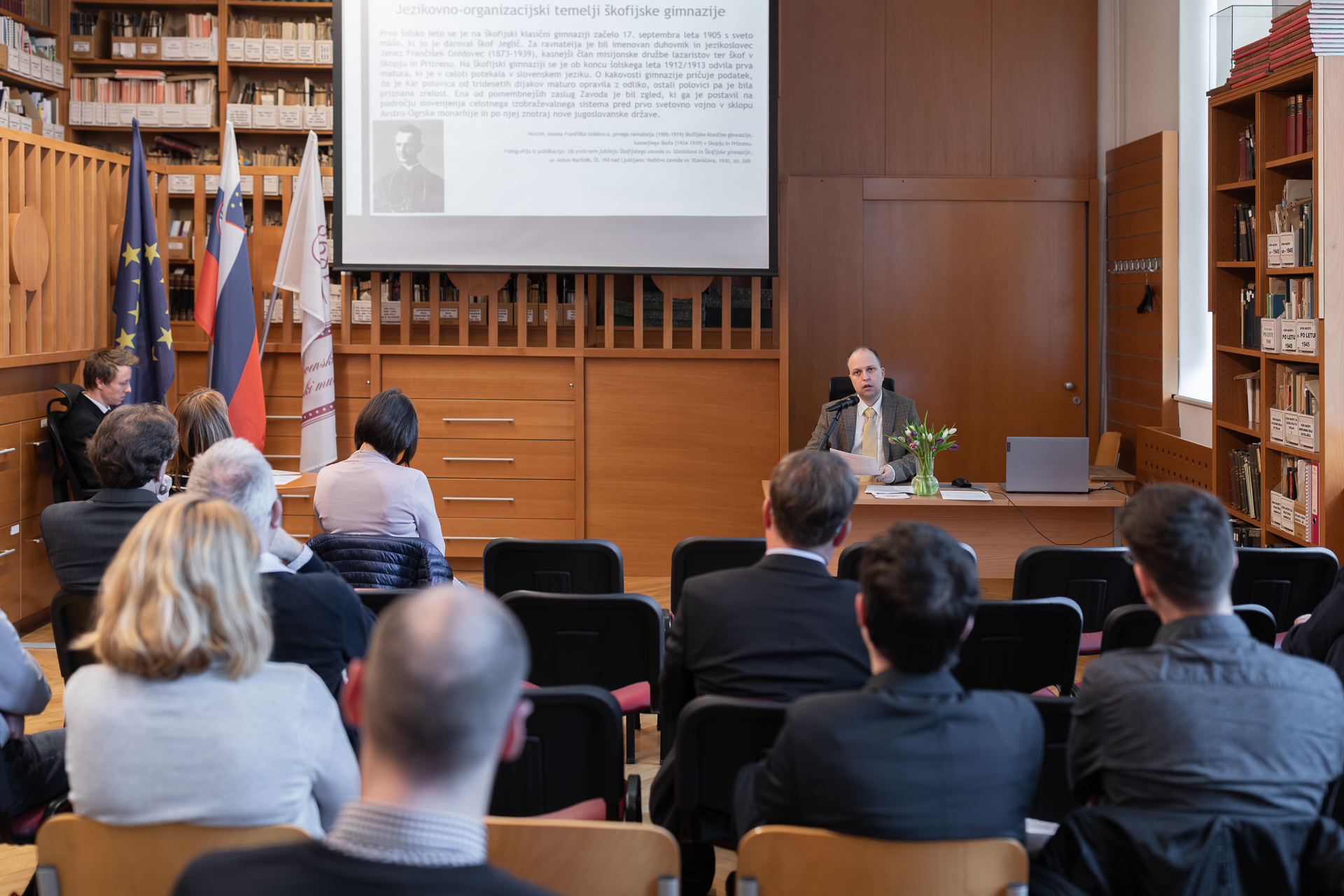
The library also frequently hosts non-library events, such as exhibition openings, staff meetings, teacher training and some of the museum’s educational activities.

Library reference activity

The library advises users on how to find, select and use library materials. It provides simpler and complex information about library materials and the data they contain. Information can be exchanged via e-mail, telephone or by visiting our reading room.

Library documents


  • General Terms and Conditions of the specialised library of the Slovenian School Museum
  • Document on the management, building and development of the library collection in the specialised library of the Slovenian School Museum
  • Code of Ethics of Slovenian Librarians

Slovenian School Museum presentation film

We invite you to feel the pulse of our museum through the film and to visit us in the future.

Watch the film