ABC books and primers as a mirror of society
This virtual exhibition is dedicated to the history of the first primers in six European countries: Slovenia, Latvia, Italy, Germany, Ukraine and Estonia.
This virtual exhibition is dedicated to the history of the first primers in six European countries: Slovenia, Latvia, Italy, Germany, Ukraine, and Estonia. It is a joint exhibition, with each country presenting its own specific layout and interpretation, reflecting local historical, cultural, and pedagogical contexts. The exhibition systematically traces the development of school-based reading literacy over time and highlights the diversity of approaches to teaching reading as well as the didactic particularities of each country. Through international comparison, the exhibition provides an in-depth insight into the similarities and differences in the design of early educational materials and the influence of social, historical, and political circumstances on the content and structure of primers. At the same time, early primers serve as documents that reveal the values of their era, norms of upbringing, and patterns of interpersonal relationships within the family, school, and broader society. In this way, the exhibition represents a significant contribution to understanding the history of literacy, pedagogical practices, and cultural exchange in Europe, while also promoting intercultural dialogue.
Slovenia
THE FIRST SLOVENIAN PRIMER
Writer, translator and protestant priest Primož Trubar, known as the father of the Slovenian language, Primož Trubar is an important figure in the history of Slovenian language and culture. His most important work, the first printed Slovenian primer (Abecedarium), which was published in the 16th century, was a turning point in the education and literacy of the Slovenian nation. It was designed to facilitate independent reading of the Bible and the Catechism, which was published alongside this work. The primer contains sections on letters, syllables and words, which also include proper names, but no reader is included.
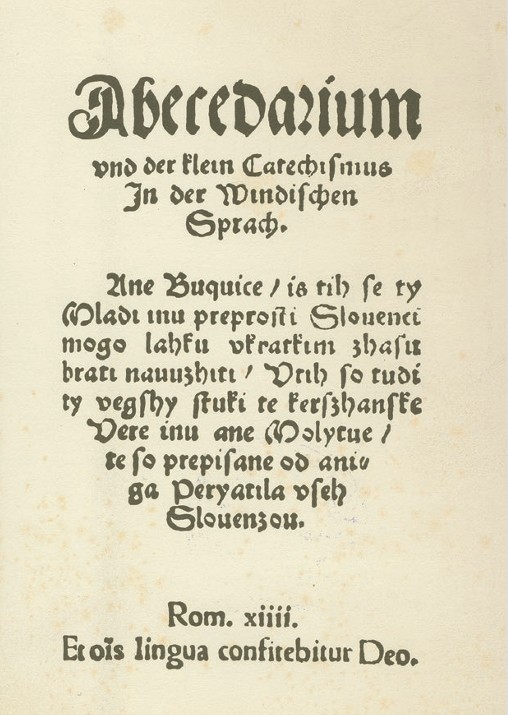
Slika 1: Primož Trubar: Abecedarium vnd der klein Catechismus in der Windischen Sprach, Tübingen, 1550
THE FIRST ILLUSTRATED PRIMER
The vicar general, dean of the seminary, inspector of secondary schools and father of modern reading instruction Peter Budin, published the first Slovenian illustrated alphabet book Novi kluzh at his own expense. Not in the form of a book, but as a paper-form learning tablet. The illustrations of the objects are placed immediately after the respective names of the objects, which makes it easier for the pupils to associate the words with their realistic representations. The alphabet, syllables and words are written in cursive script, with capital letters appearing only at the end.
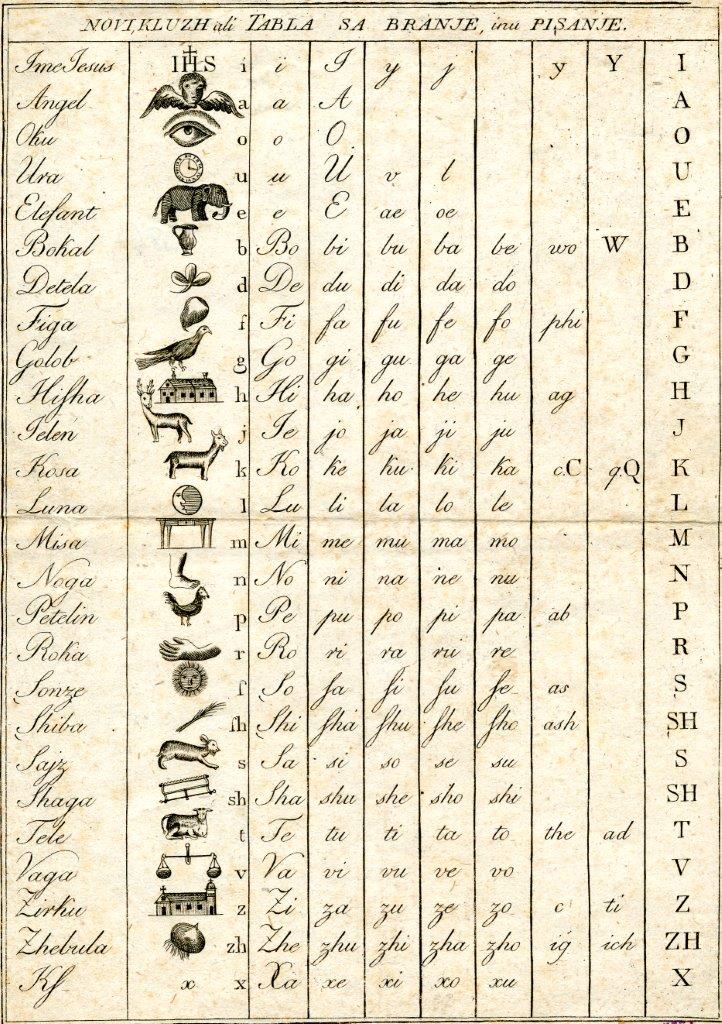
Peter Budin: Novi Kluzh, s.l., 1808
THE FIRST COLORED PRIMER
The first Slovenian alphabet book to be illustrated in colour was ABC v podobah in besedi, written by Ivan Tomšič, a teacher, writer, translator and educator from Bela Krajina, who went to Vienna to have it printed in colour. This tiny book of 18 pages contains colour illustrations as well as some informative texts and the basics of addition. Each letter is accompanied by an illustrated scene, making a total of 24 colour pictures on 8 pages, with the letter Ž is located on the back cover.
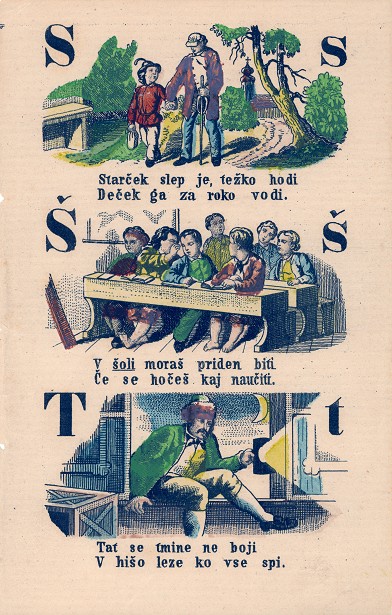
Ivan Tomšič: ABC v podobah in besedi, Ljubljana, 1869
A READER FROM THE PERIOD BETWEEN THE TWO WORLD WARS
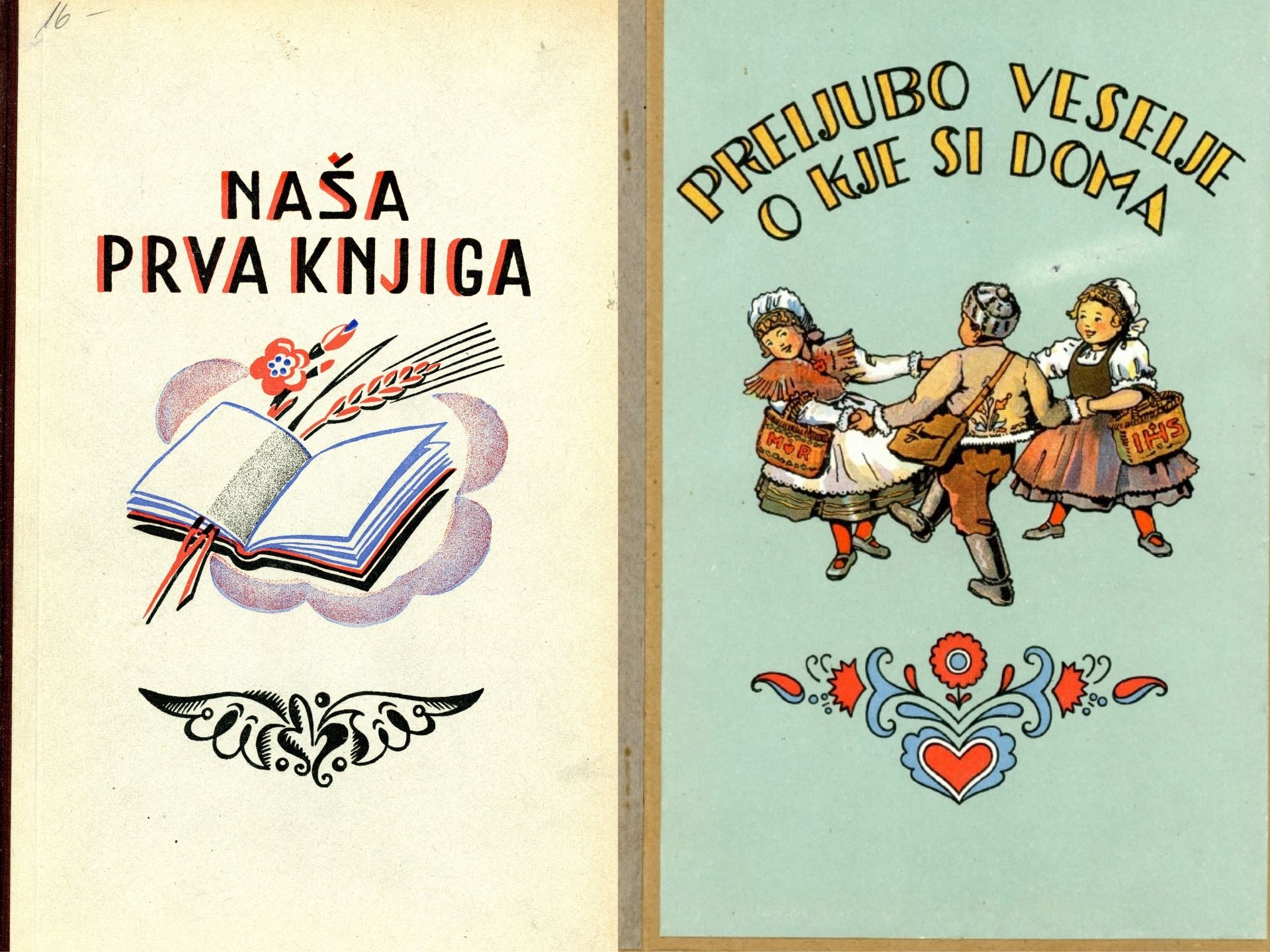
The reader Preljubo veselje, o kje si doma, written by Ferdinand Bobič, achieved high popularity both among schoolchildren and their parents due to the highly endearing illustrations by Radovan Klopčič. Extending over 128 pages, it contains the alphabet section and reading texts. It began to be used before World War II. Its reprints during the war were censored and adapted to the will of the occupying forces. It remained in use in the first post-war year.
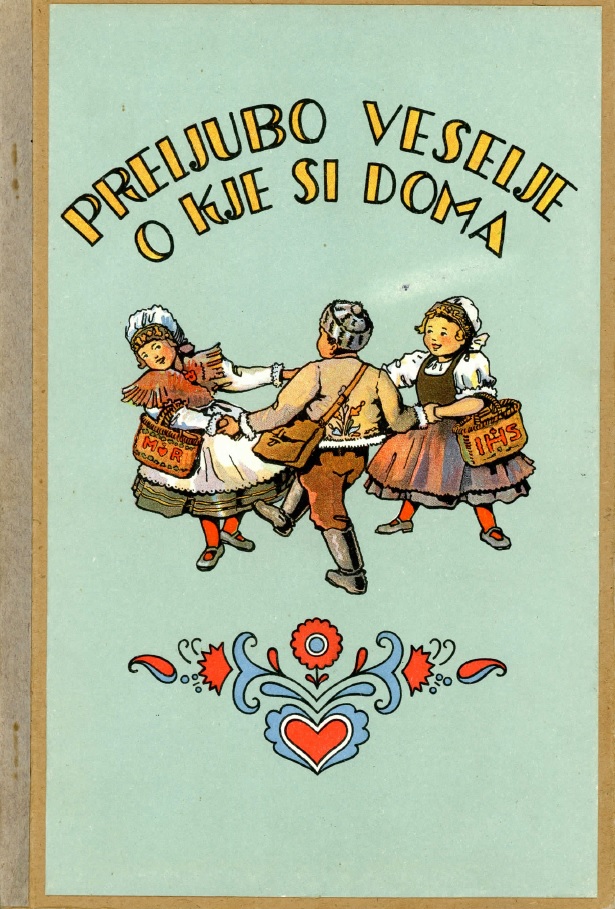
Ferdinand Bobič: Preljubo veselje, o kje si doma, Ljubljana, 1939
A PRIMER FROM THE PERIOD OF THE ITALIAN OCCUPATION
The primer Naša prva knjiga, written by Pavle Flere, was used in the interwar years. During World War II, it remained in use under the Italian occupation, only the contents relating to the Kingdom of Yugoslavia and the Karađorđević royal line were replaced with relevant Italian content. It thus includes chapters on the history of Italy as well as portraits of Benito Mussolini and King Victor Emanuel III.
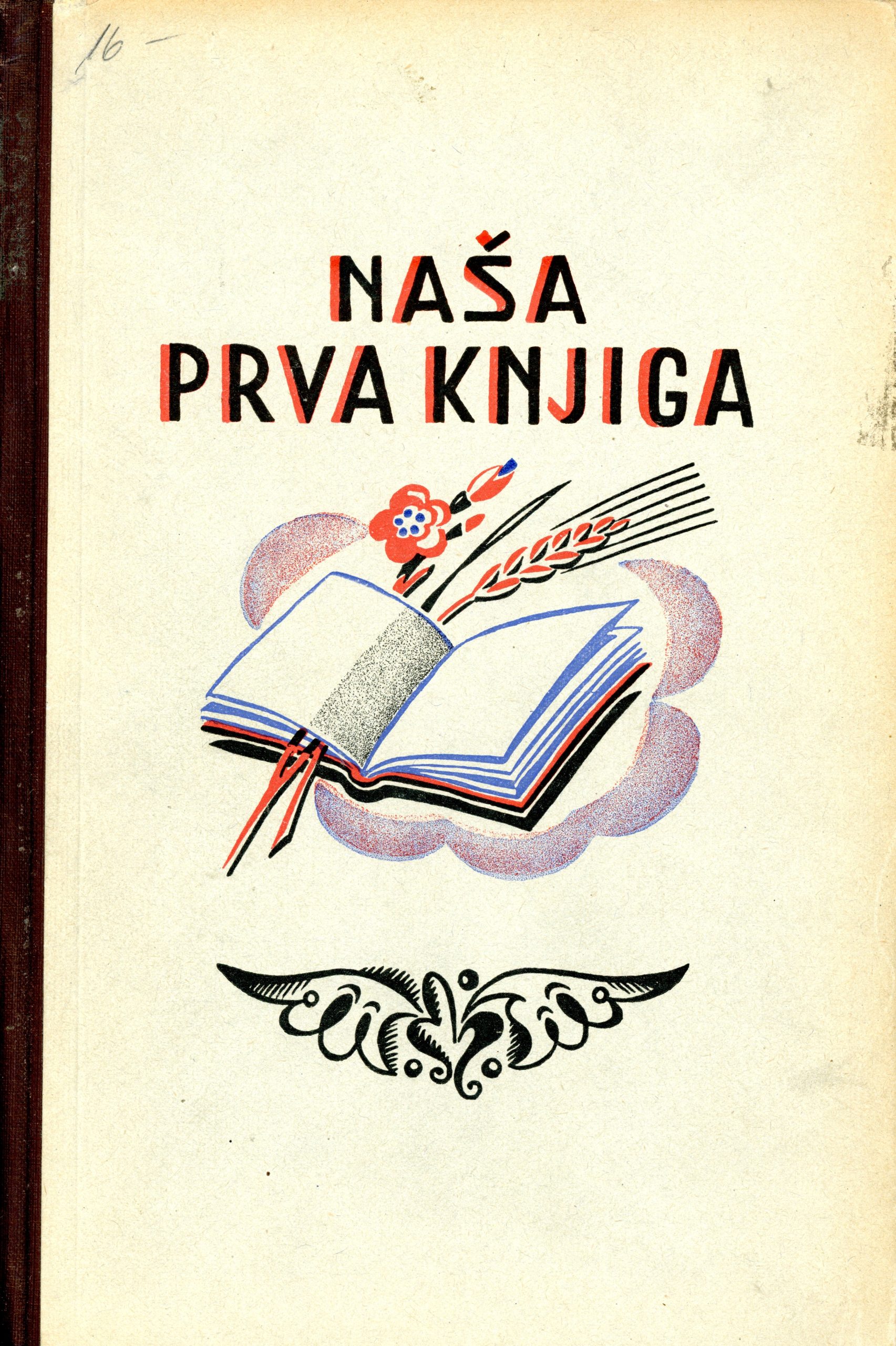
Pavel Flere: Naša prva knjiga, Ljubljana, 1941
A PRIMER FROM THE PERIOD OF THE GERMAN OCCUPATION
During World War II, Slovenian children under the German occupation learned to read in primary schools from a primer Fibel Kinderwelt by Franz Brauner. This primer contains both the alphabet and reading sections. It featured abundant illustrations, many of them permeated with Nazi iconography. The content was also imbued with Nazi ideology and the glorification of Adolf Hitler. The primer was used until the end of World War II.
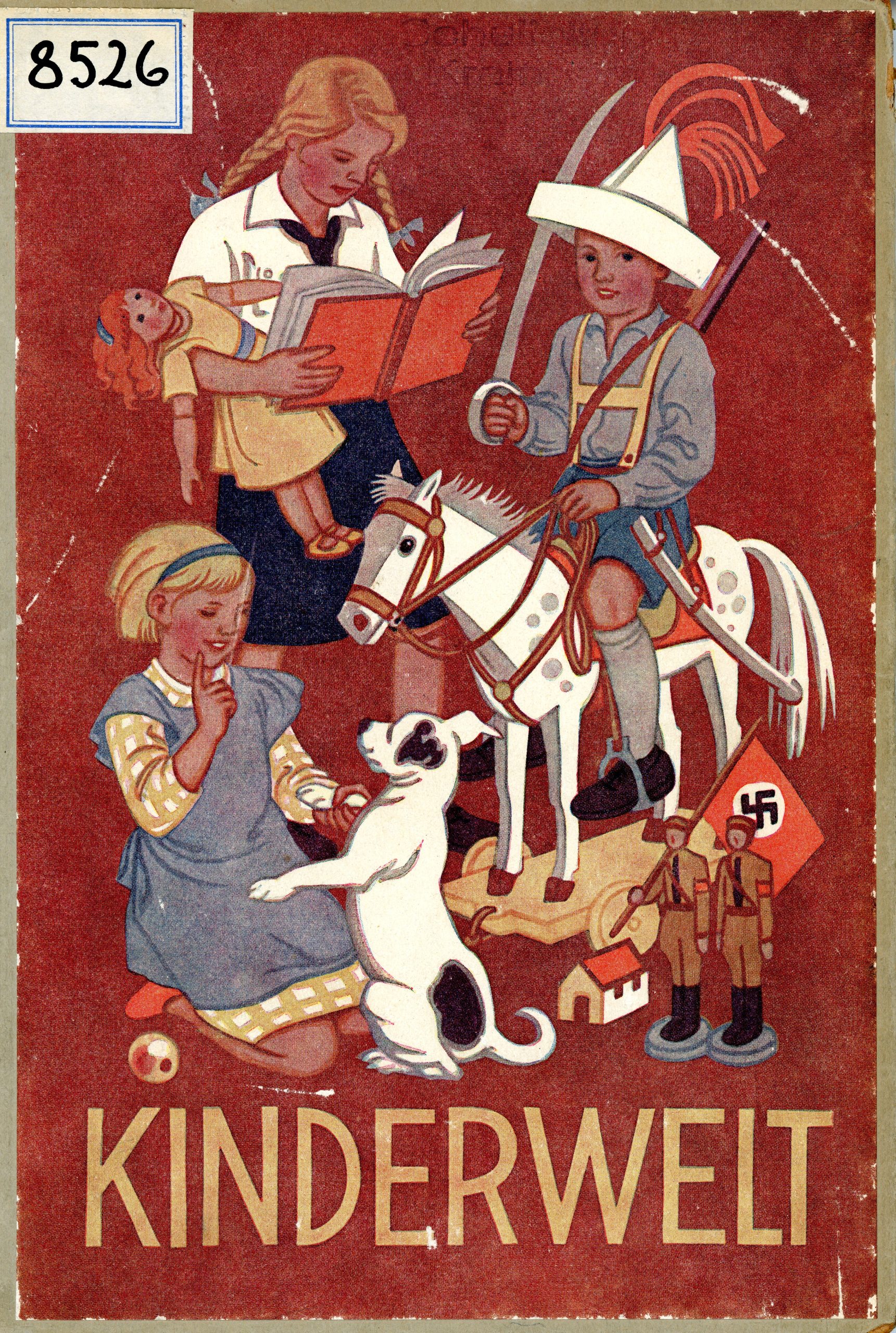
Franz Brauner: Kinderwelt, Graz, 1941
A PRIMER FROM THE SOCIALIST PERIOD
During the socialist period, Rudolf Završnik, Josip Ribičič, and Bogomil Gerlanc wrote the reader Prvo berilo, which became the most frequently reprinted and longest-used primer of that era. It is filled with charming illustrations, which in many places reflect socialist ideas and propaganda. The content progresses from lower case letters and words to upper case words and then to the reader. The primer was being reprinted with slight changes and different illustrations until 1973.
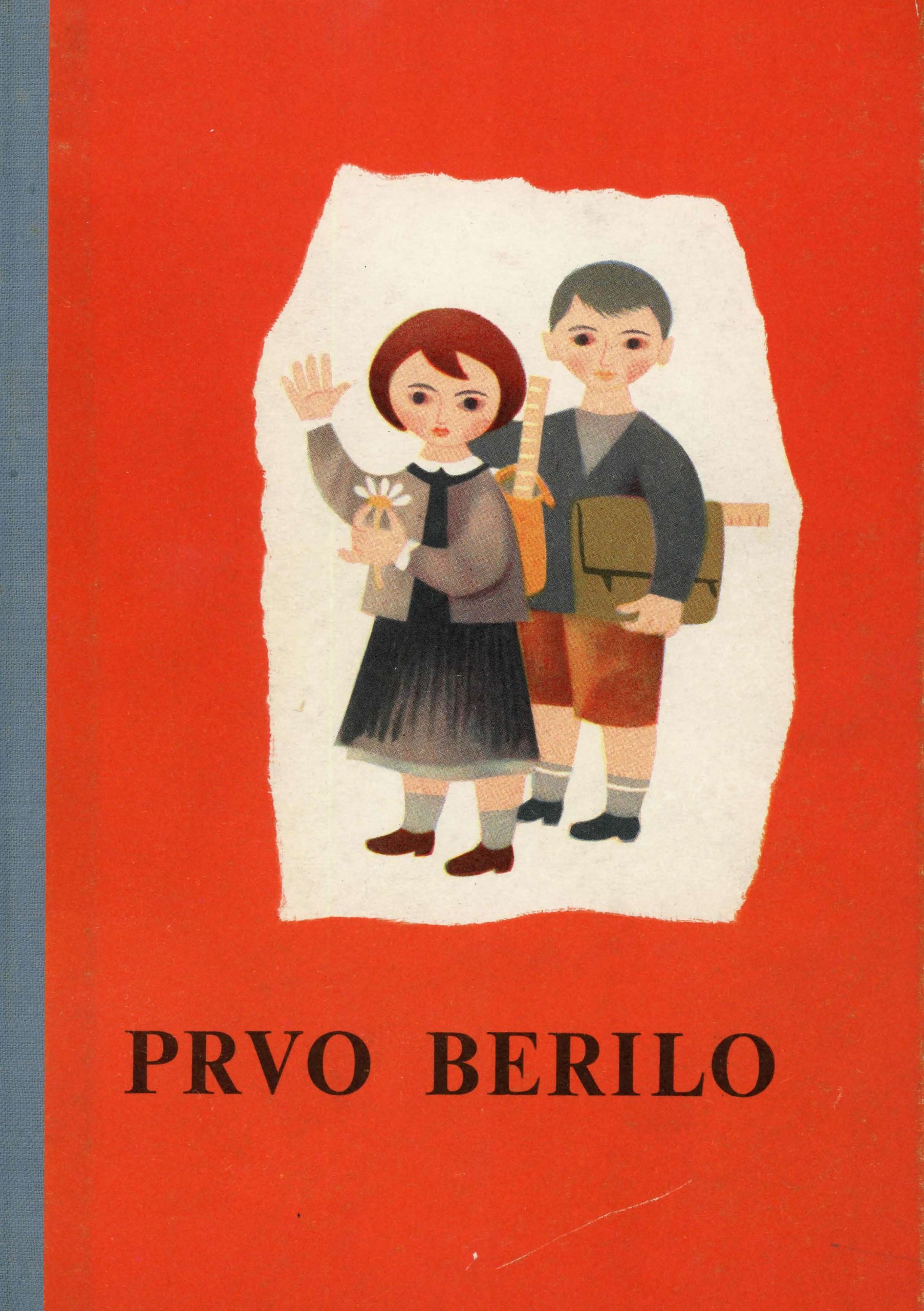
Rudolf Završnik, Bogomil Gerlanc, Josip Ribičič: Prvo berilo, Ljubljana, 1973
A PRIMER TODAY
The textbook Lili in Bine, written by Mira Kramarič, Milka Kern, and Majda Pipan, is intended for the initial learning of the Slovenian language and is divided into ten thematic sections. Each section comprises conversation, development of language skills, reading, speaking and listening. Each section ends with “What I have learned”, a page designed to review and consolidate the material studied. The textbook is richly illustrated in colour.
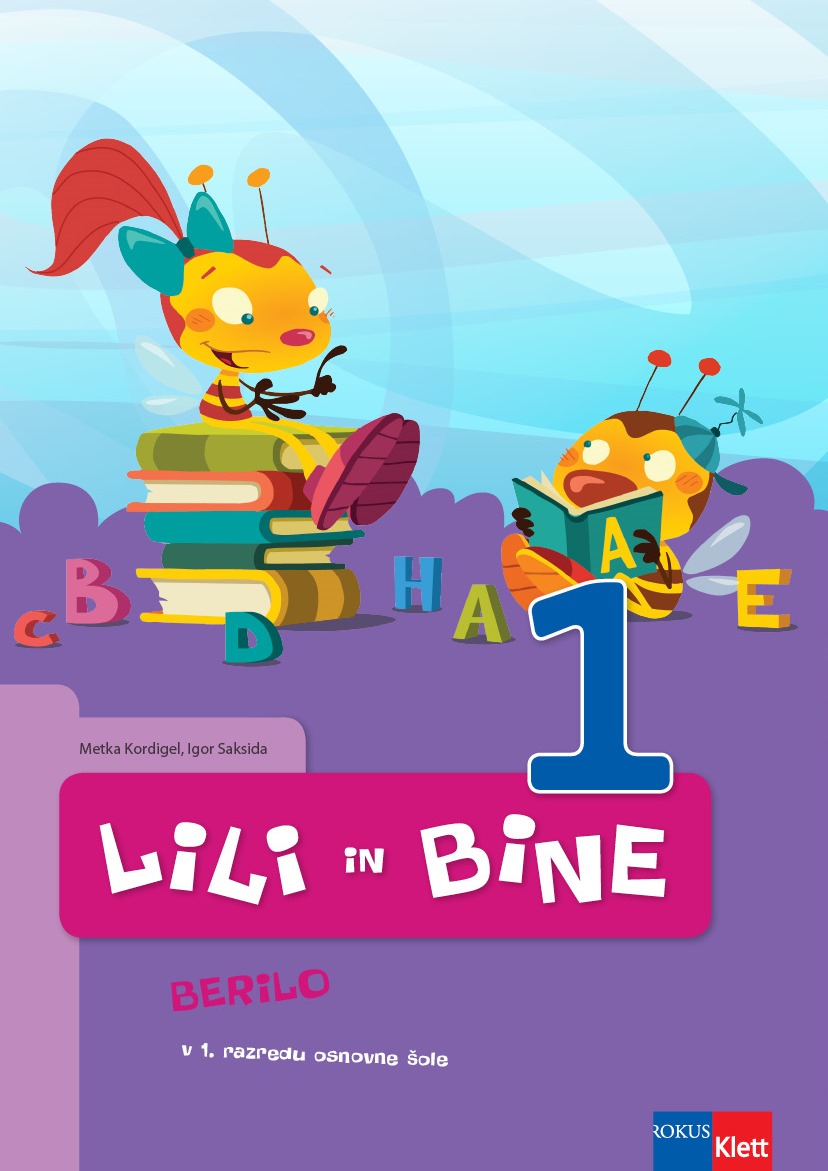
Mira Kramarič, Milka Kern, Majda Pipan: Lili in Bine 1, Ljubljana, 2011
Latvia
The territory of present-day Latvia was part of various states and subject to their political powers until 1918. This created a diverse cultural environment and affected the level of education in the regions of Latvia. Religion played a significant role.
17th CENTURY
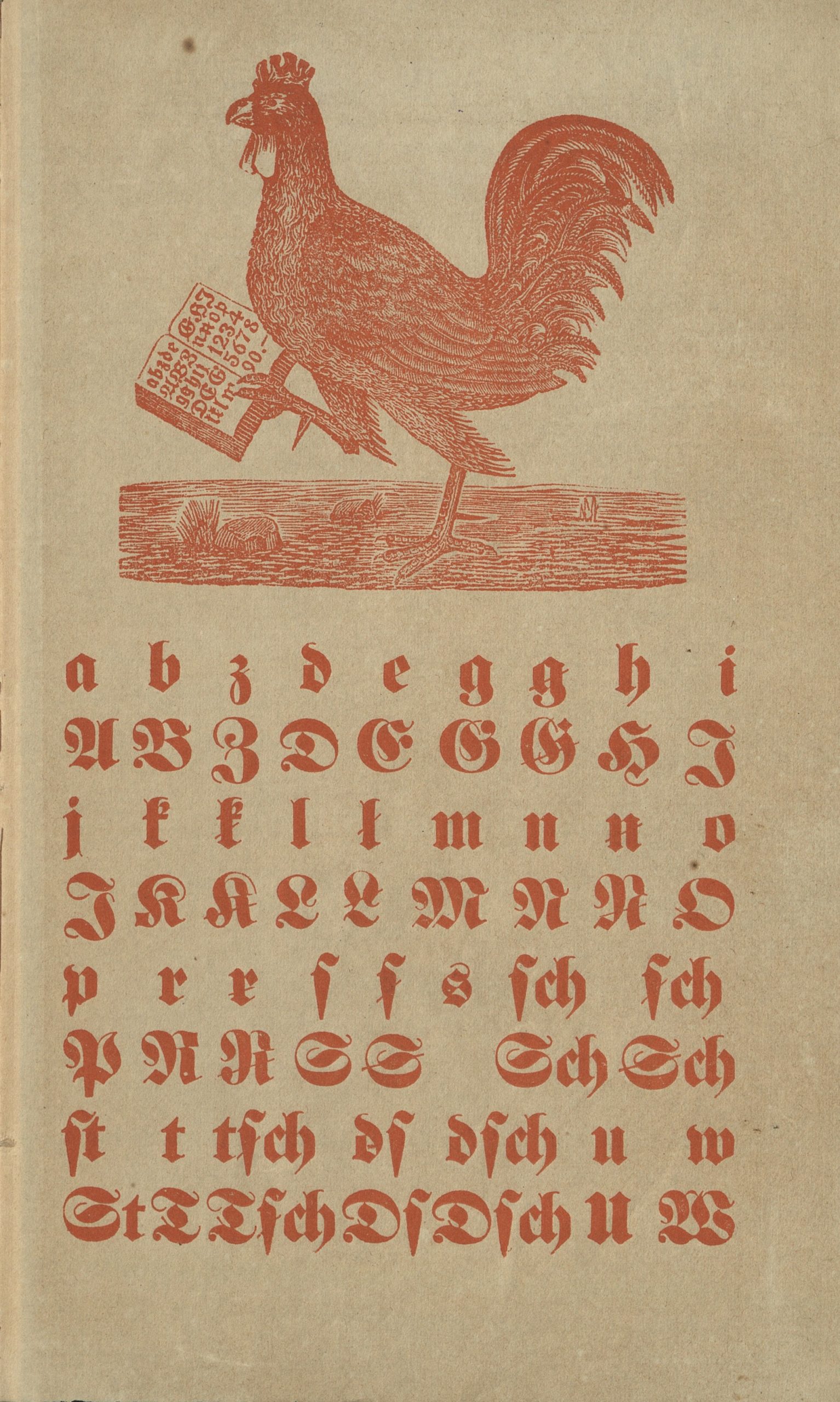
The first authors of the Latvian ABC books were German Lutheran pastors. Around 1683, the first ABC book in Latvian was printed, a fragment of which is kept in the library of the University of Tartu (Estonia). It is decorated with the image of a rooster – the herald of the morning light and a symbol of knowledge. This ABC book is modeled after the first ABC book printed in Swedish (1660), which is also decorated with a rooster. It is known that the oldest Latvian ABC books are also kept in the library of the University of Lund (Sweden). The image of a rooster is associated with both the first illustration on the cover of an ABC book and the spires of the three main churches of Riga, an important center of the Reformation – the Dome, St. Peters, and St. Jacobs church. The silhouettes of roosters are already visible in the first printed panorama of Riga, published by Sebastian Münster (1488–1552), a professor at the universities of Heidelberg and Basel, and a cartographer, in his book «Cosmographia» (after 1544). In Vidzeme (north-central Latvia) and Kurzeme (western Latvia), children began to be taught not only to read, but in the second half of the 17th century, to write as well.
18th CENTURY
In 1782, the first secular ABC book for Latvians was compiled by the German theologian and one of the founders of Latvian secular literature and the first illustrator of children’s books, Gotthard Friedrich Stender (1714–1796). In 1787, he published pictorial ABC in which he created an illustration for each letter and added an instructive couplet of poetry. In 1797, his next work followed – recommendations for teachers in teaching reading, which can be considered the first methodological materials in teaching the Latvian language. Until the beginning of the 19th century, the ABC book was the only book for children in the Latvian language. During this time, ABC books were also printed in the territory of Latvia in German and Russian, as well as in one of the Latvian dialects – Latgalian. Textbooks were expensive and difficult to obtain, and a considerable proportion of children acquired their knowledge through homeschooling, using the Bible and other available texts, such as the calendar.
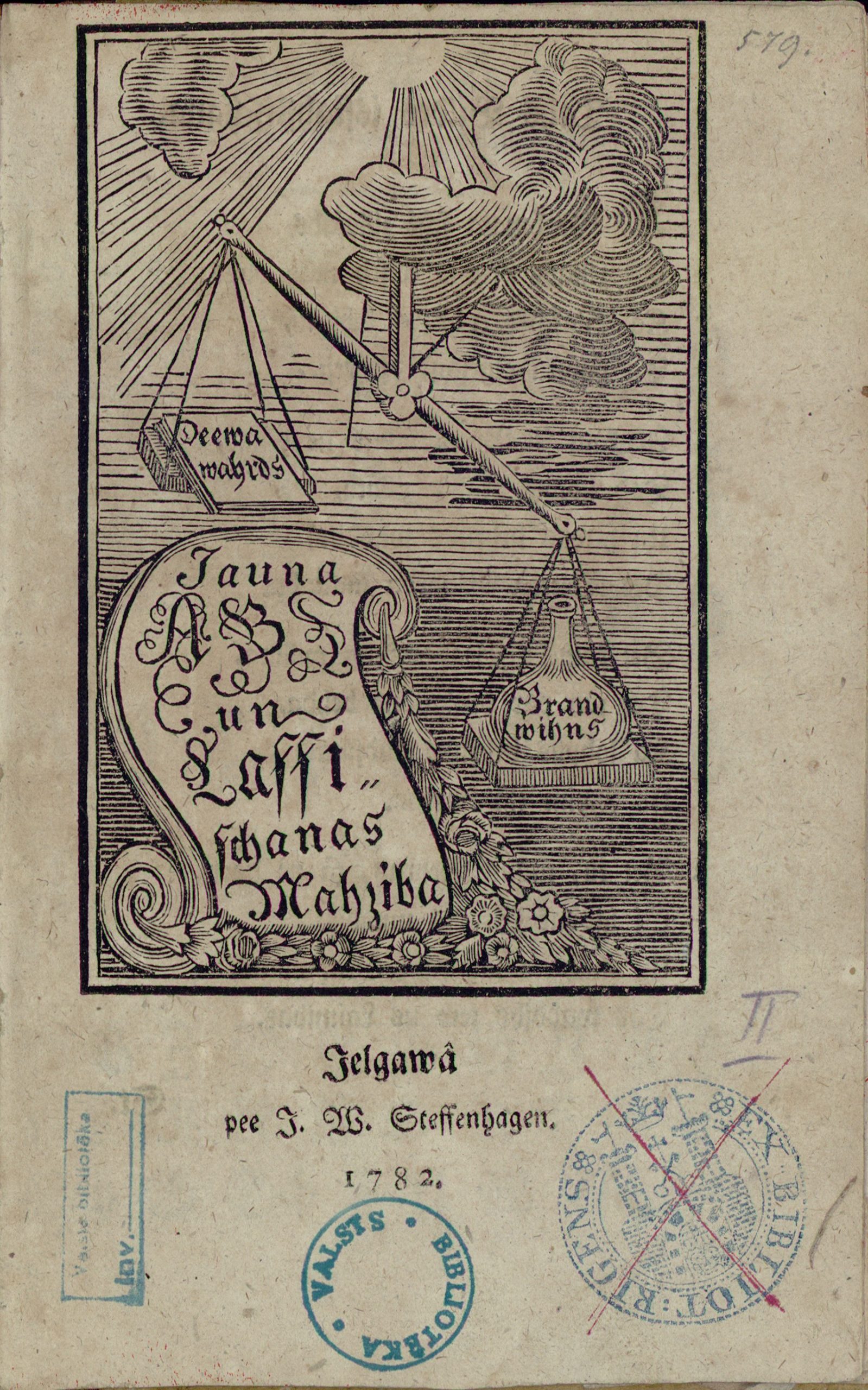
Gothards Frīdrihs Stenders: Jauna ABC un lasīšanas mācība, Jelgava, 1782.
19th CENTURY
The first ABC book for Latvians using the sound (phonic) method was compiled by teacher and publicist Andrejs Spāģis (1820–1871) in 1844. Alongside the ABC books, spelling books were published, which were comparable to the ABC books. At the end of the 19th century, the Russian Empire implemented a policy of Russification, which established compulsory instruction in Russian at school. In the first grades of primary school, the permissibility of the native language was determined only in Latvian language and religious education classes. Latin printing was banned in the eastern part of Latvia – Latgalia (1865–1904). In the rest of Latvia, ABC books continued to be published in Latvian and German, along with Russian. A trilingual ABC book in Hebrew, Russian, and French was also published (1897).
Ernsts Aleksandr Švehs: Jauna ābece, turklāt tiem, kas savus bērnus lasišanā pareizi grib izmācīt un Dievam par godu audzināt, Riga, 1877.
20th CENTURY
In 1918, the Republic of Latvia was proclaimed. Already in the first years of its existence, the first ABC books were published. In the 1920s and 1930s, the difference between the lifestyles of peasants and city dwellers remained. ABC books are also compiled differently for peasants and city dwellers, thus continuing the tradition begun in the 19th century. ABC books are printed for schools of various ethnic minorities living in Latvia. Some editions have been printed as many as eight or more times. They are richly illustrated.
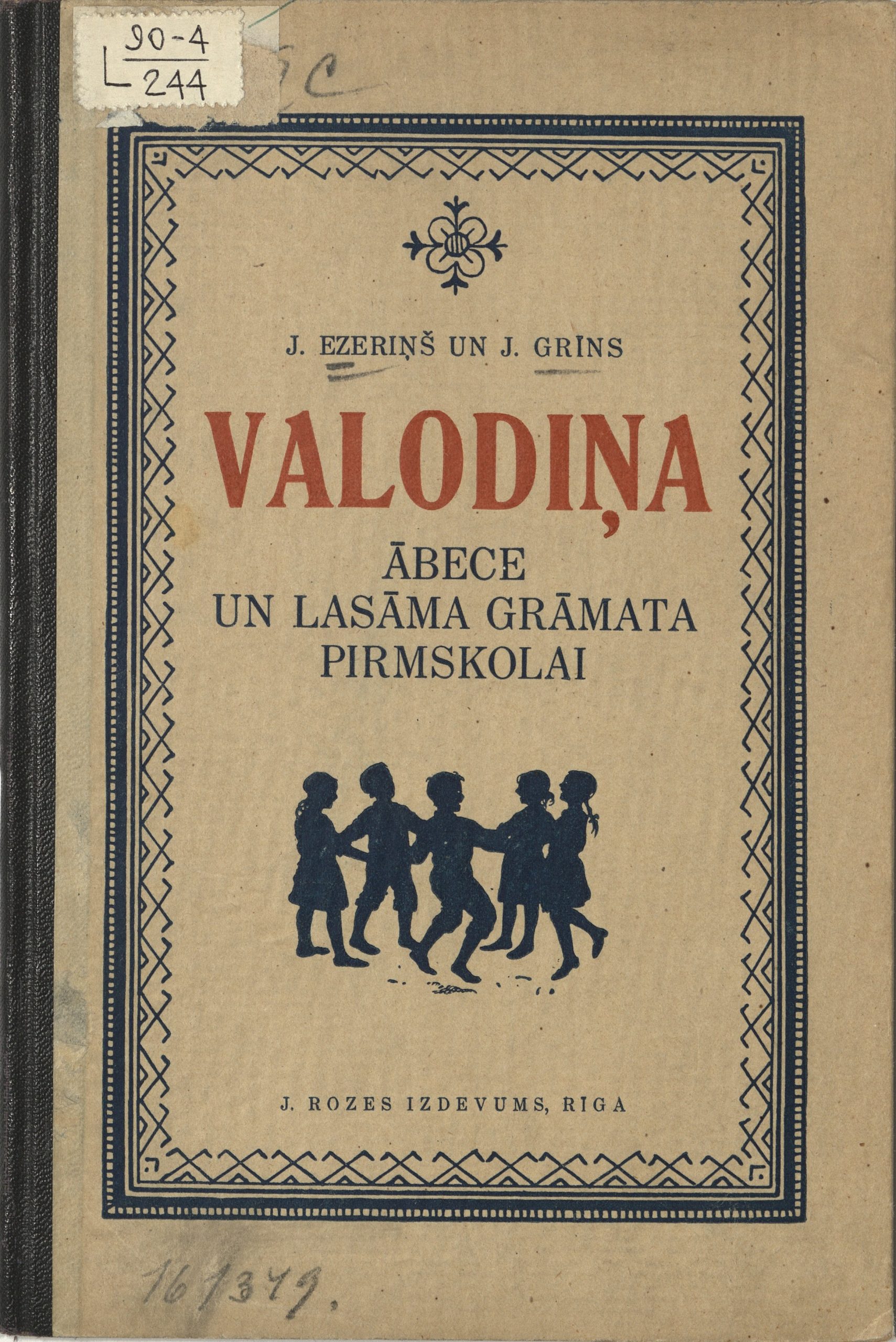
Jānis Ezeriņš, Jānis Grīns: Valodiņa, ābece un lasāmā grāmata pirmsskolai, Riga, 1924
1940-1990
In 1940, when the Soviet Union occupied Latvia, the education system changed radically. ABC books including the ideology and symbols of the Soviet regime were published. During the occupation of Nazi Germany (1941–1944), ABC books published in independent Latvia were republished and newly compiled ones were published. In 1944, the publication of Soviet ABC books resumed. They were published in Latvian and Russian, as the latter has become the main inter-national language of communication in Soviet Latvia. In the following years, ABC books by authors loyal to the Soviet regime were published.
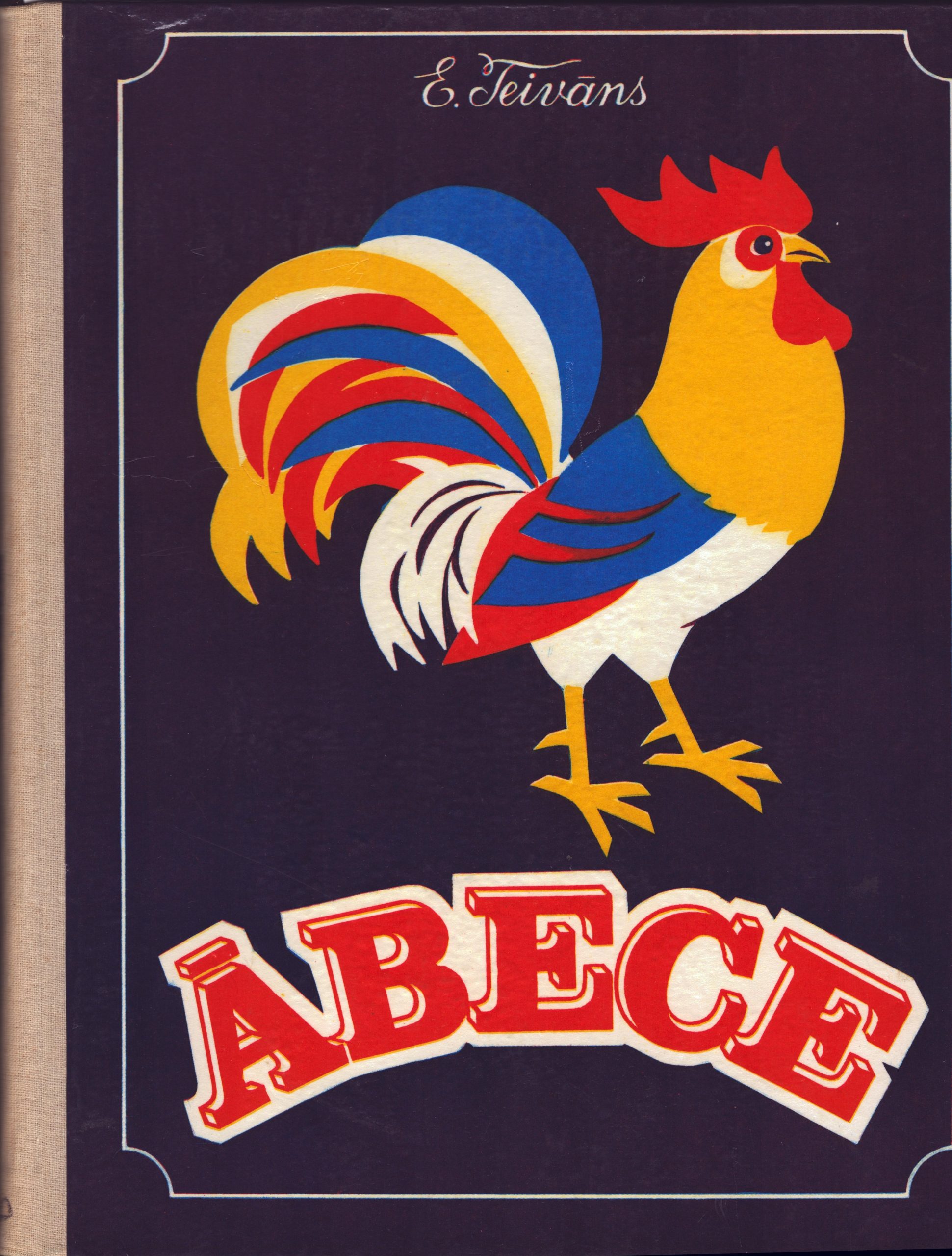
Eduards Teivāns: Ābece, mācību grāmata [kurlmēmo bērnu skolām], Riga, 1987
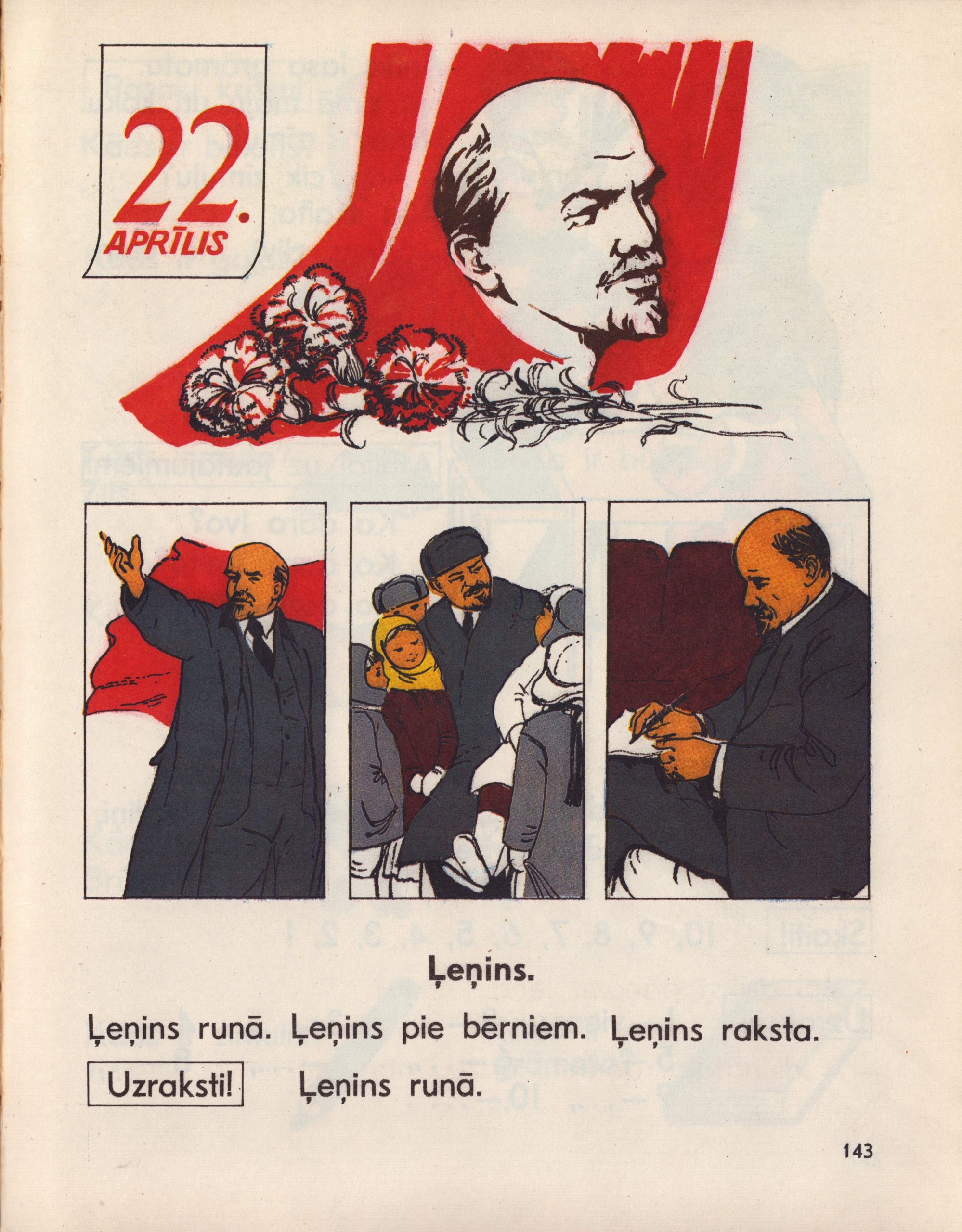
Eduards Teivāns: Ābece, mācību grāmata [kurlmēmo bērnu skolām], Riga, 1987
1991-TODAY
In 1991 Latvia fully regained its independence. At the end of the 20th century, ABC books became a teaching tool for preschoolers and were published by various publishing houses. An ABC book was compiled for an indigenous nation of Latvia of Balto – Finnic descent- Livonians- and pupils of other nationalities living in Latvia, and a bilingual ABC book for Ukrainians in Latvia (2022).
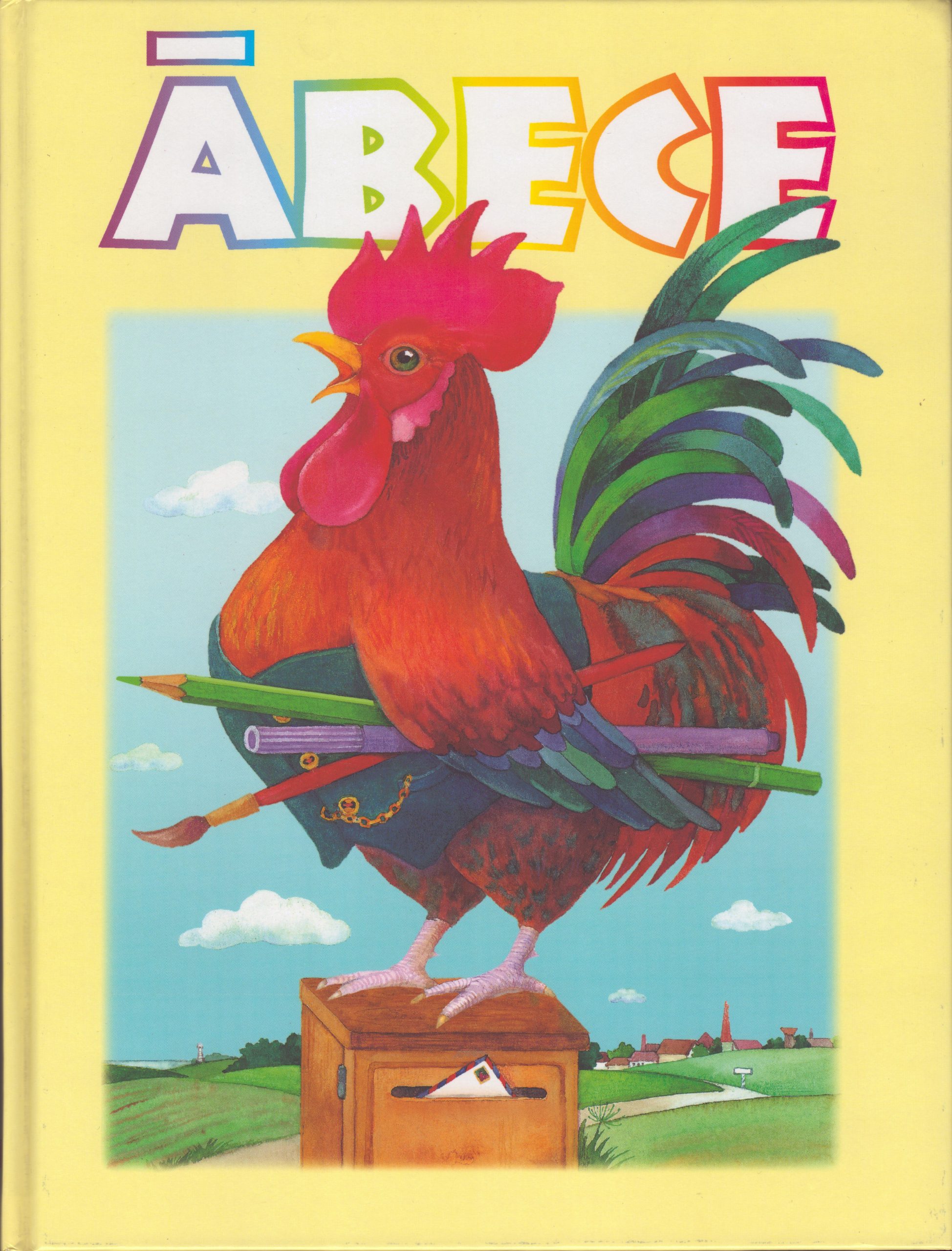
Gita Andersone: Ābece, Riga, 2004.
Italy
AVANTI ITALIA NUOVA
This was a textbook used in all parts of Italy during the rise of Italian Fascism in 1922. In 1923, the so-called Gentile Reform abolished all schooling in languages other than Italian, affecting all schools in German language in South Tyrol, those in Slovenian and Croatian language in the Julian March and the French schools in the Aosta Valley. The book contains many references to the Italian royal family, recalling the main events leading to Italian Unity in 1861, glorifying the soldiers’ sacrifices for the Kingdom of Italy.
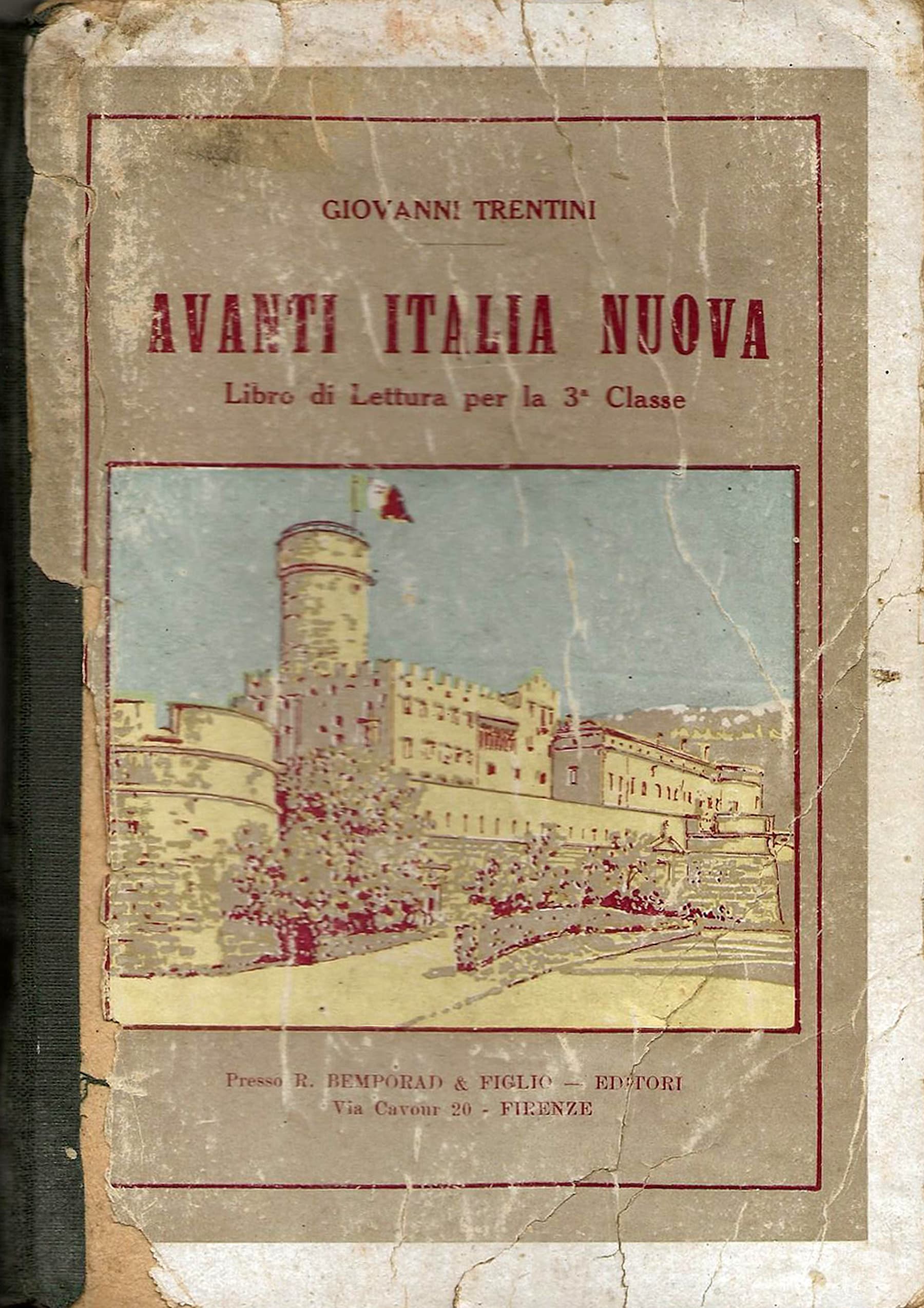
Giovanni Trentini: Avanti Italia Nuova, Firenze, 1923
AMOR DI PATRIA
The title perfectly reflects the main intent of its creation: “Love for the Country” and is one of many primers created to alphabetize and ideologize the population to create the proper Fascist. The book contains Fascist imagery and texts sustaining the totalitarian, nationalist programming. In South Tyrol, the now all Italian compulsory schools were not only institutions propagating the Fascist ideas, but they were one of the most relevant means to Italianize the region’s German- and Ladin-speaking population.
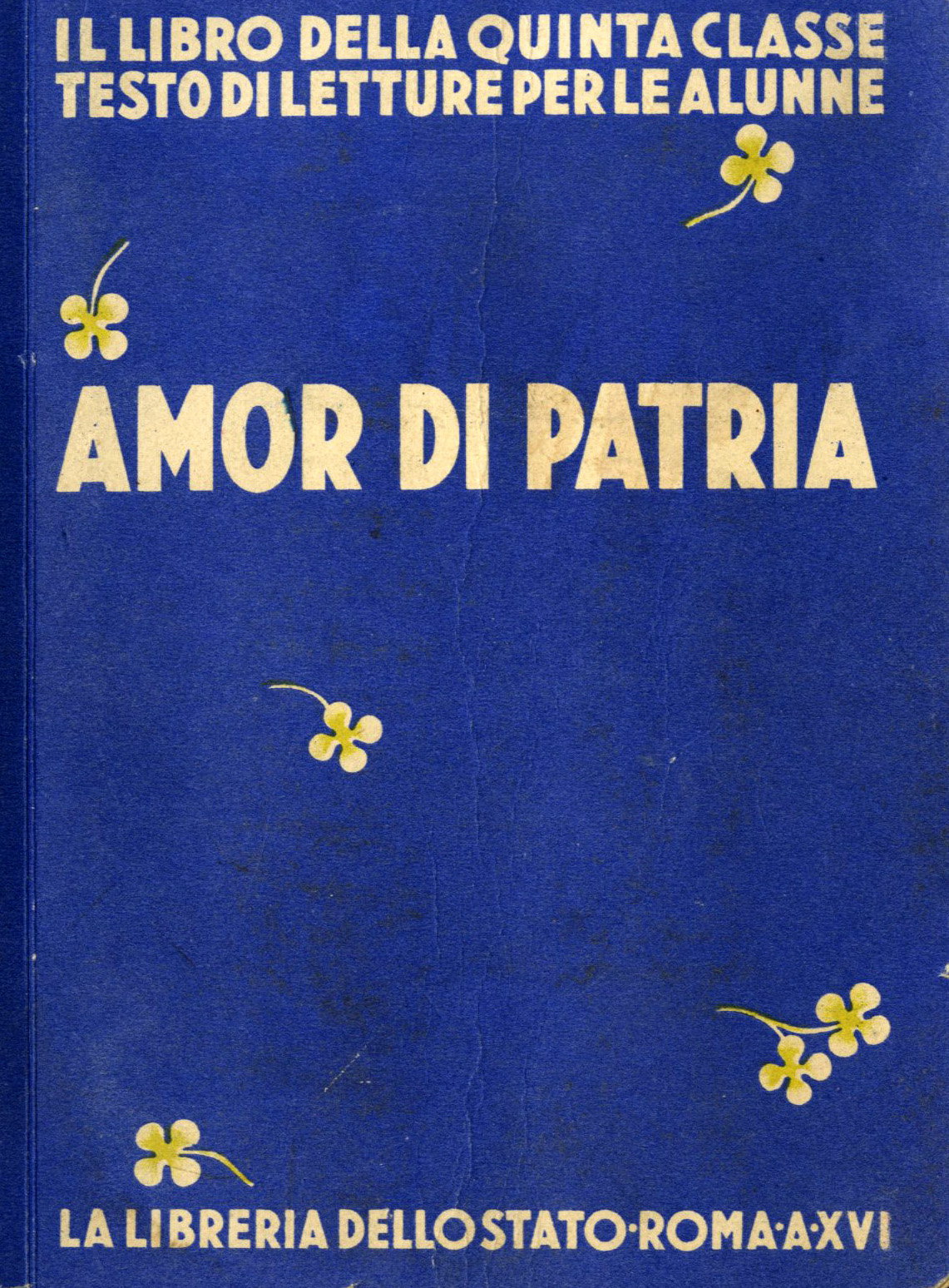
Francesco Sapori, Carlo Testi: Amor di Patria, Rome, 1938
DEUTSCHES BILDERBUCH
After the South Tyrol Option Agreement of 1939, the native German- and Ladin-speaking population – former part of the Austrian Empire until 1919 – had the option of either emigrating to neighboring Nazi Germany or remaining in Fascist Italy, with all its repressive measures to complete the Italianization process. This primer was published in German language – otherwise prohibited – to better prepare the population to emigrate into the German Reich. It shows Nazi graphics and symbols combined with traditional imagery, creating a frame of familiarity with the content.
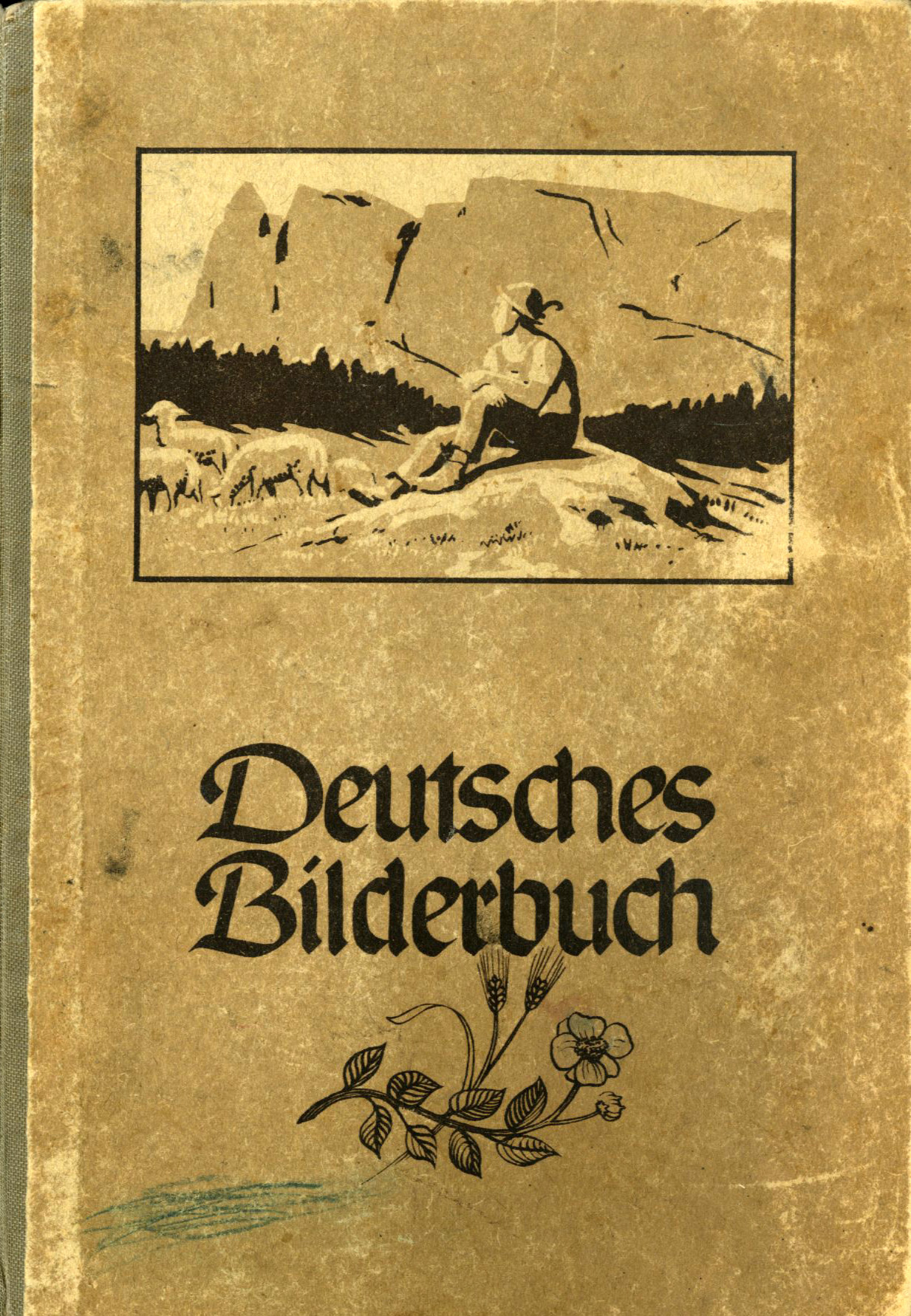
Heinz Deluggi: Deutsches Bilderbuch, München, 1941
FIBEL
This book was created by an institution created to facilitate the emigration of South Tyrol ‘s Ladin- and German-speaking population into the German Reich and was part of a series of highly ideologized National socialist school books to further prepare the pupils to “be more German” for their future in Germany. The books were published in South Tyrol in 1943, following its inclusion into the Operational Zone of the Alpine Foothills, the Nazi German occupation zone.
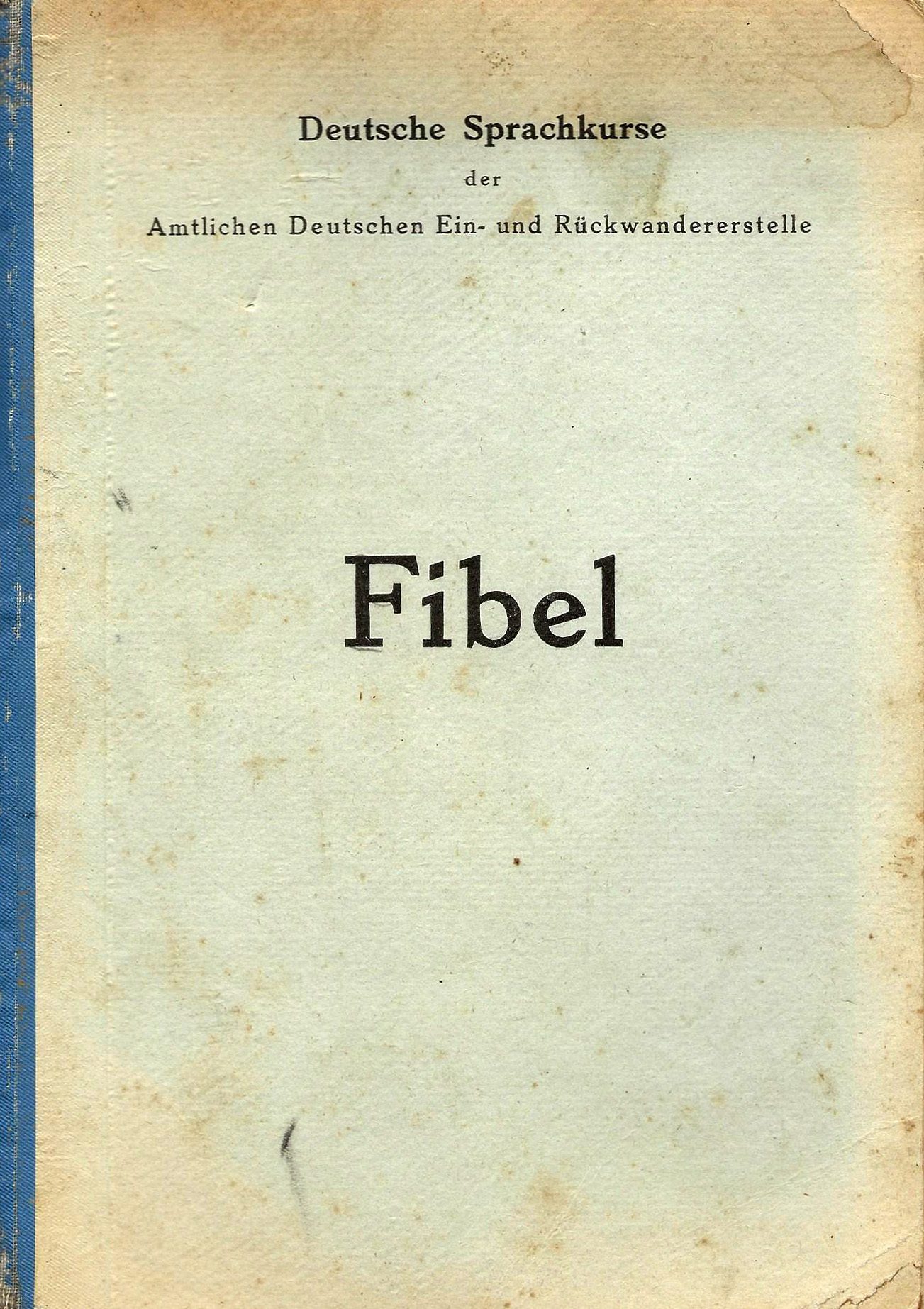
Amtliche Deutsche Ein- und Rückwandererstelle: Fibel, Bolzano, 1943
LIES UND LERNE 1960
After the Second World War, German, Italian and Ladin were all declared official languages and the growing level of self-government provided three separate schooling systems. These school books were created by “teachers for the homeland” in German language. Texts and images reflect the main elements of the local tradition: Tyrolean landscapes, catholic religion, agriculture, artisanry and handcrafting. They also praise historical figures strictly related to the Austro-Hungarian and South Tyrolean realities, like Andreas Hofer or Empress Maria Theresa.
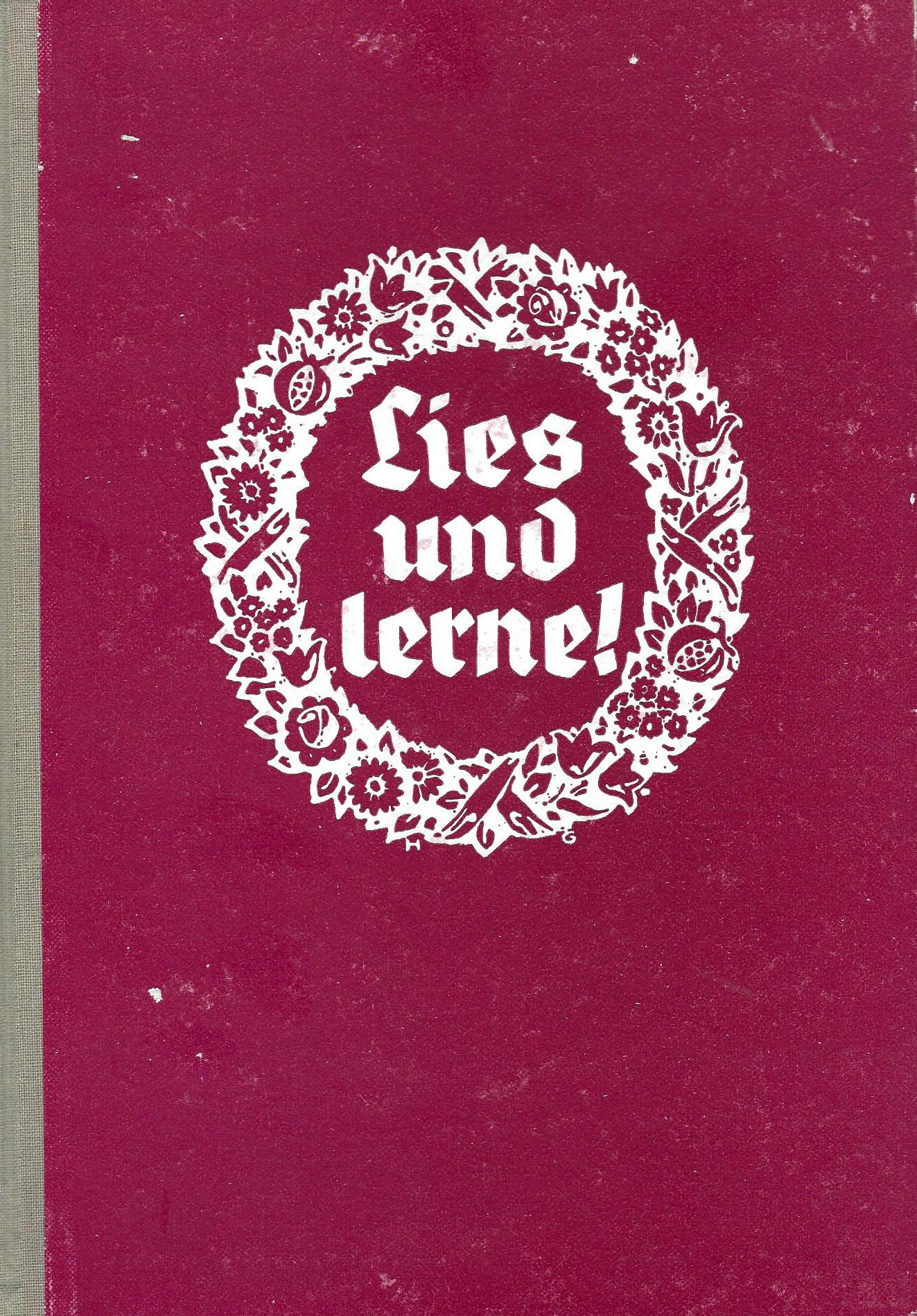
Eigene Lehrkräfte: Lies un Lerne, Bolzano, 1960
LIES UND LERNE 1972
The book series called “Read and Learn” was continued during the years. The edition published in the Seventies shows some differences to the one of the Sixties. The content integrates “new technologies” like the phone, now part of the daily life of most people with the traditional, local and religious elements. The historical part was now dedicated to local associationism like the firefighters – a relevant institution in many small villages – and other contemporary work realities like the post office or the factory, showing the slow transition from subsistence farming and artisanry to new sources of income.
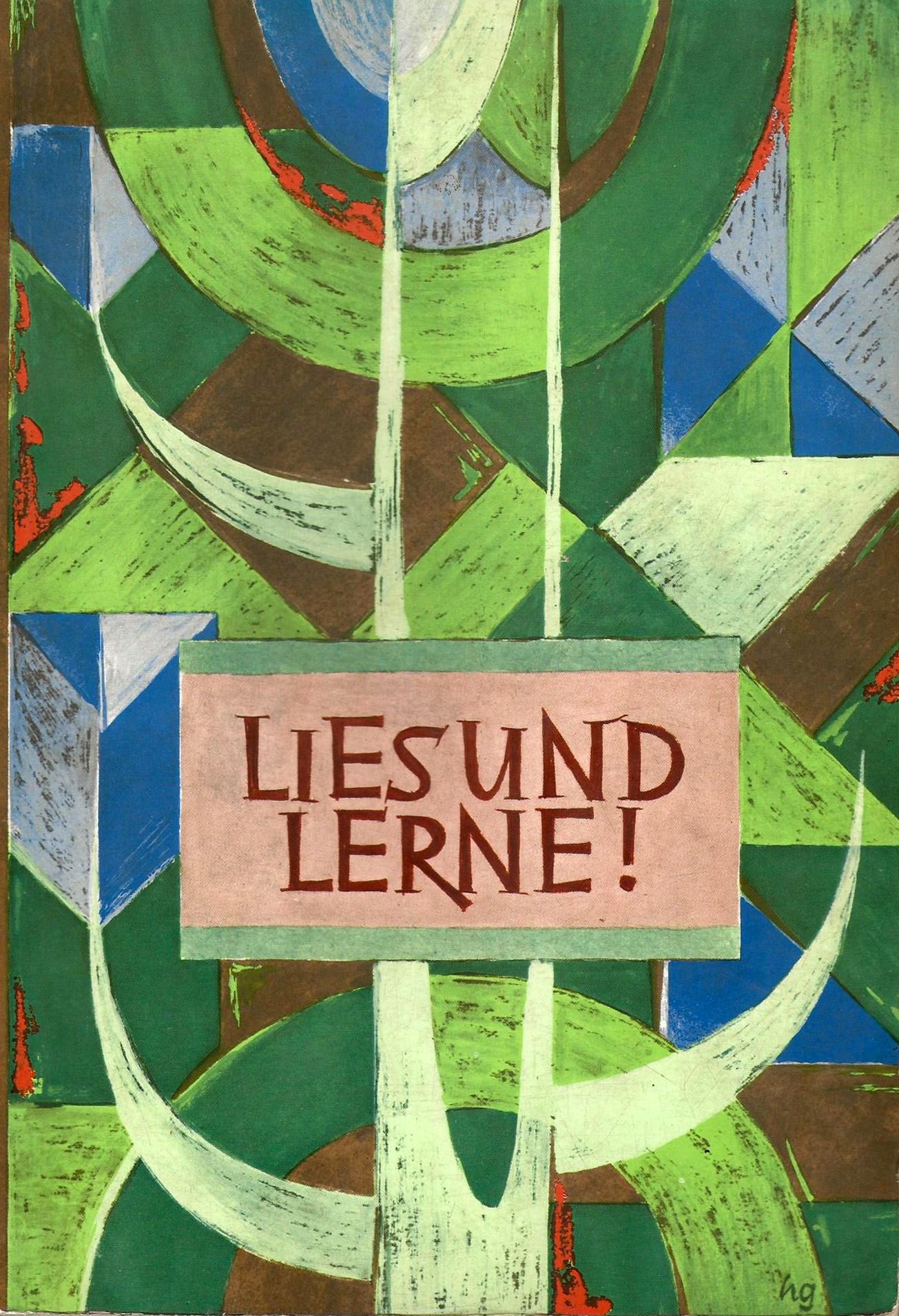
Eigene Lehrkräfte: Lies un Lerne, Bolzano, 1972
Germany (Bremen)
A PRIMER FOR THE ELEMENTARY EDUCATION
New conditions for the publishing of educational textbooks emerged with the expansion of the public school systems and the compulsory schooling, which was introduced by the city-state Bremen in 1844. New first reading books were now being conceptualized for their use in primary schools. The new method called „Lautiermethode“ was introduced in the Bremen primer “Handfibel“ of 1843: The letters were to be learnt as sounds in the first reading lessons (not by their letter naming – for example ‘ef’ for f). Not only the textbook displays a methodological reform, the reading pieces for school beginners also show a new secular orientation towards state schools (instead of church schools). Short texts about everyday objects, flora and fauna are placed before reading pieces about godliness and virtues that the children should learn.
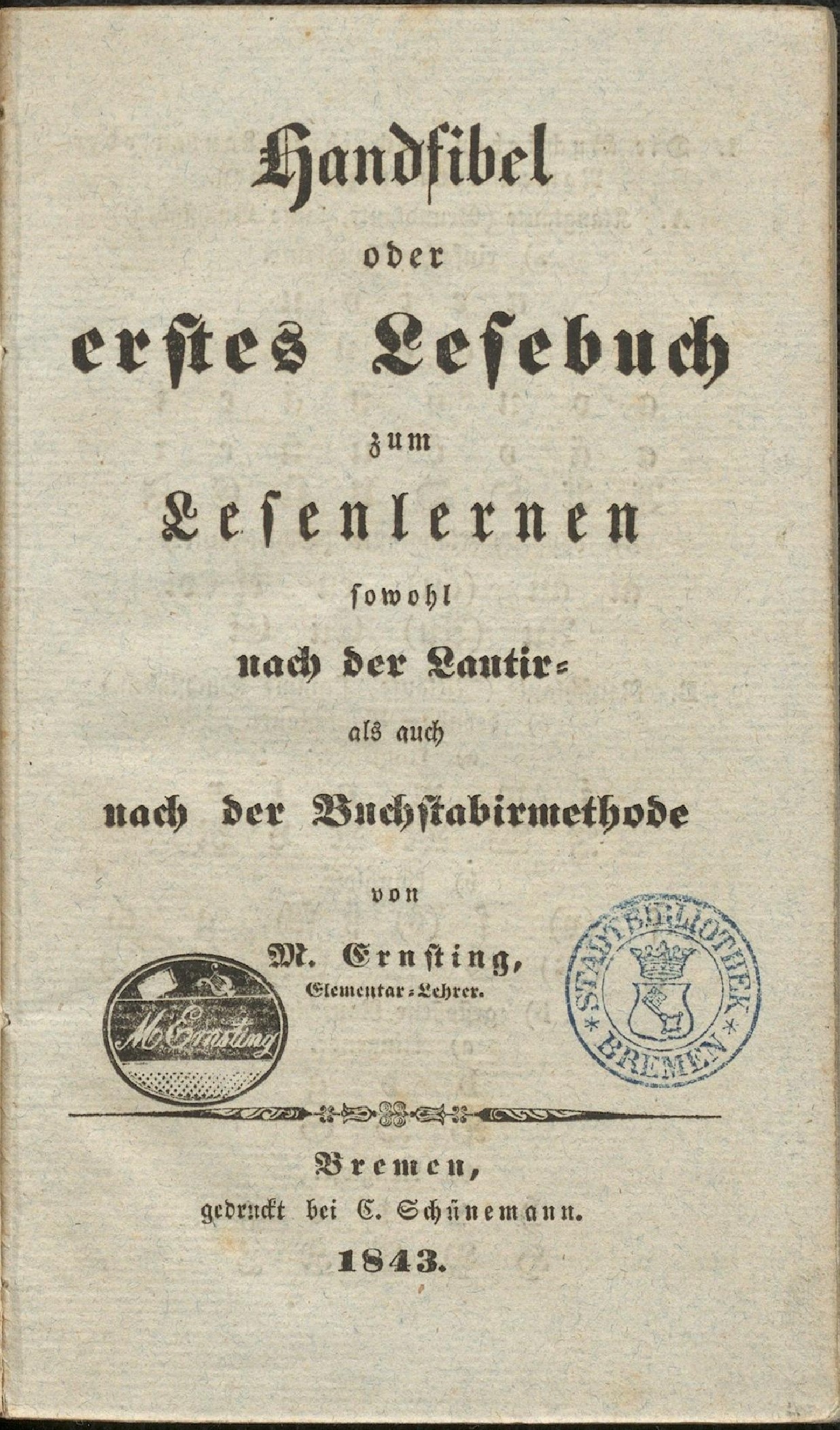
Ernsting: Handfibel oder erstes Lesebuch zum Lesenlernen, Bremen, 1843.
THE “SCHREIBLESEFIBEL“ OF THE BREMEN BOOK COMMISSION
In 1830, the Bremen teacher’s association had already founded a Book Commission, to which 4 to 10 teachers belonged over the years. It published its own textbooks to support their association’s widows‘ and orphans’ fund. The primer called „Schreibelesefibel“ by the Bremen Book Commission was published in 1871. Reading and writing were now taught together (following the so-called reading-writing-method – “Schreib-Lese-Methode”). Visual teaching was also to be combined with reading exercises – the first letters (the hedgehog, the clock, the donkey…) were linked with visual images. The 12th edition of this primer was published in 1895. In the Bremen curriculum of 1898, it was one of the compulsory learning books for pupils. The primer in Kurrent is illustrated with small pictures. The only regional reference is Bremen Cathedral.
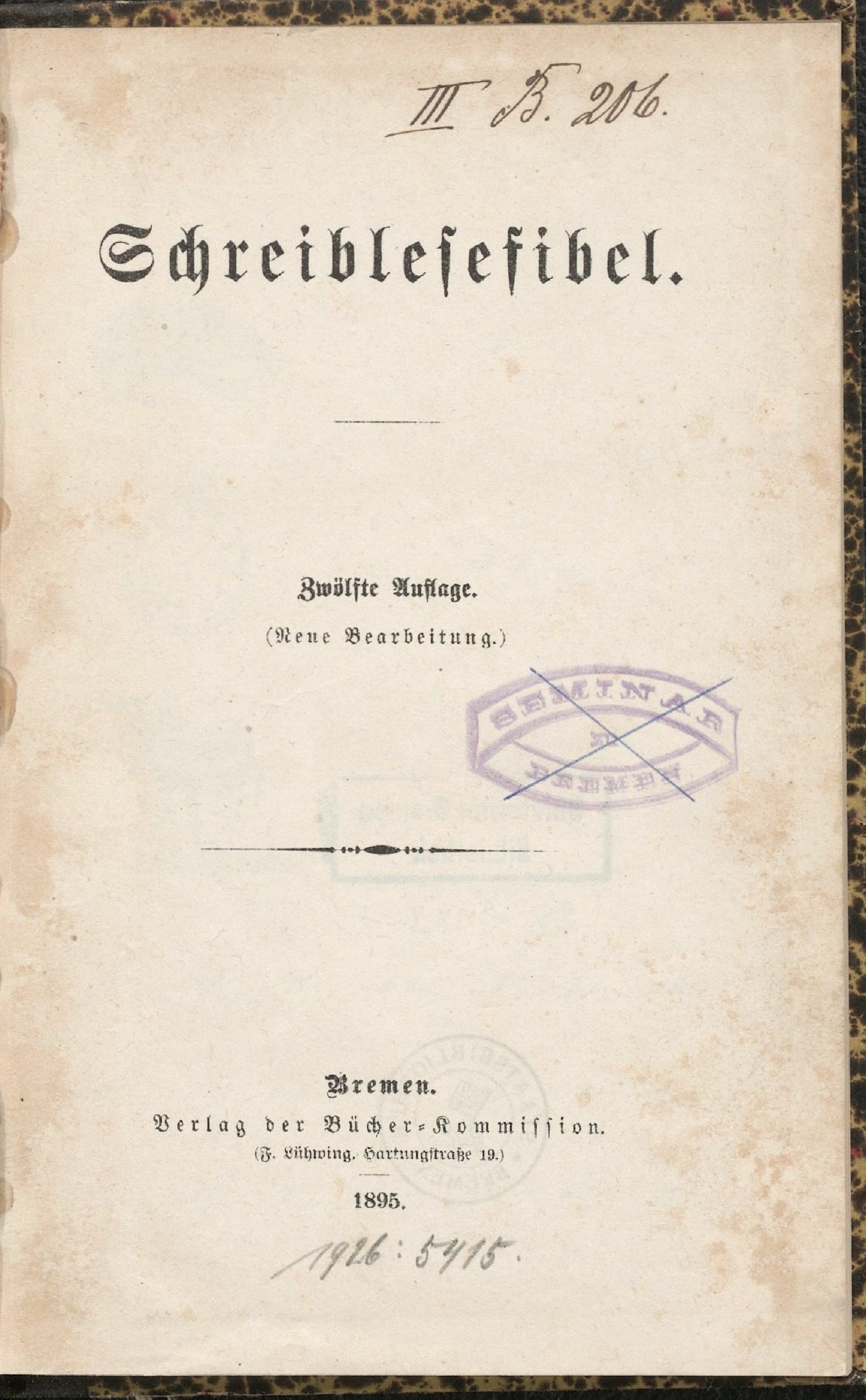
Friedrich Lühwing: Schreiblesefibel, Bremen, 1895.
THE BREMER FIBEL FROM 1905 – THE STANDARD TEXTBOOK AT BREMEN’S SCHOOLS AFTER 1900
Like other primer publishers of the time, the Book Commission around 1900 strove to create an artistically appealing design for its primers, as they were intended to be a ‘lovable and readable’ book for pupils. In 1905 the first Bremen primer was published with large colourful illustrations. The painter Cornelis Jetses, who later became famous in the Netherlands, created the drawings. The position of the military becomes clear in the first reading pieces. Loyalty to the fatherland and nationalism are depicted in stories. The colonial movement and enthusiasm for sea travel are also the subject of illustrations. In contrast to this primer with idyllic-conservative images, a reformist educational primer was designed: Fritz Gansberg’s new primer “Bei uns zu Haus“ was published in 1905 – but his primer was not allowed to be used in Bremen schools.
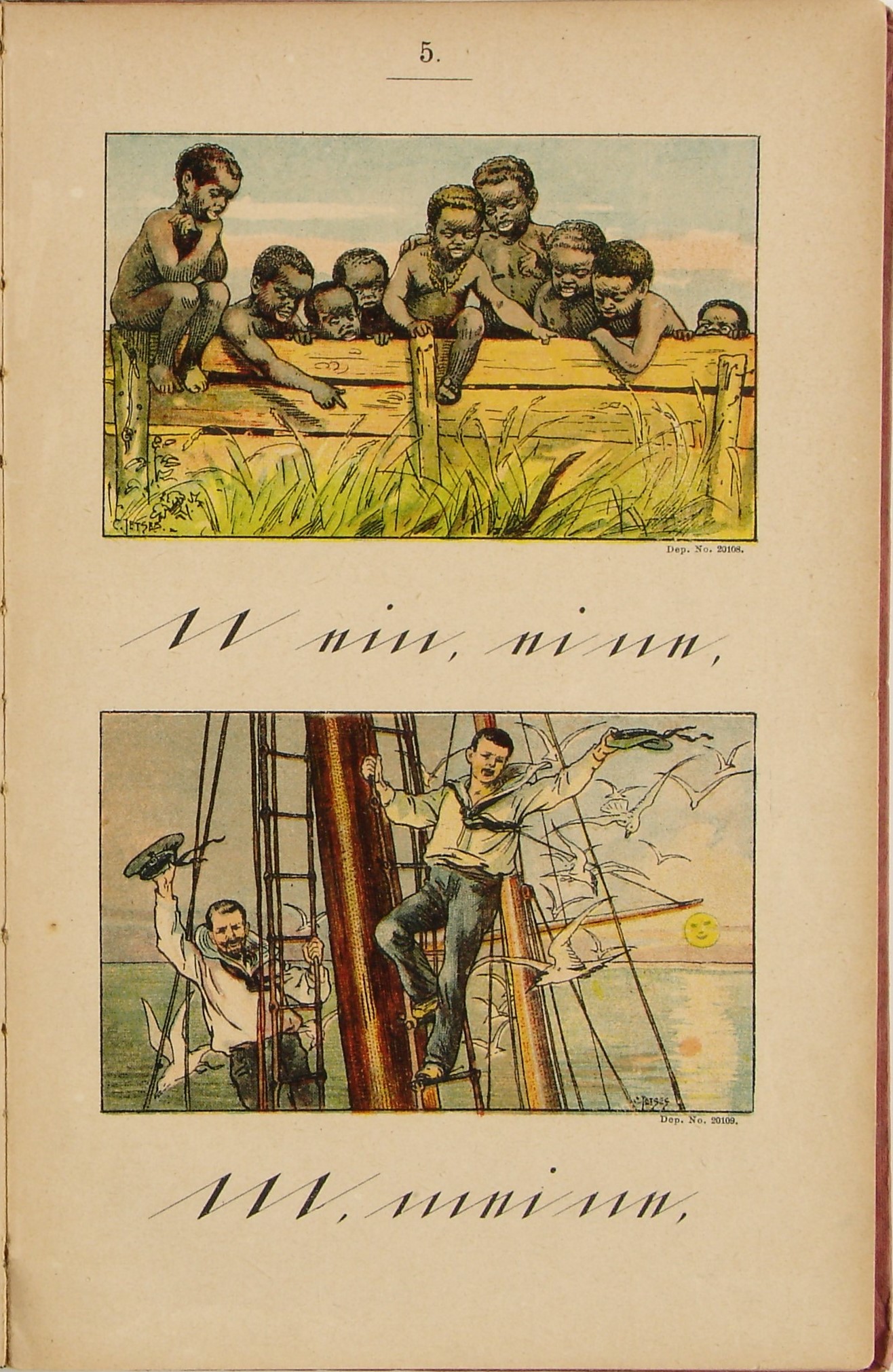
Cornelis Jetses: Bremer Fibel, Bremen, 1905
A PRIMER FOR THE LITTLE CITY FOLK – NEW PRIMERS IN THE 1920s
Even after 1900, the usual way of learning to read was criticised – the ‘stammering of letters’ and the learning of words that did not come from the children’s vocabulary were viewed critically. The reform movements at the turn of the century also changed the view of the educational approach to schoolchildren. In 1905, Fritz Gansberg, an important Bremen reform pedagogue, published the new primer ‘Bei uns zu Haus. Eine Fibel für kleine Stadtleute’ (“At Home with us – A Primer for the Little City Folk”). Learning letters was to be introduced with stories, which focussed on working class-children’s everyday lives in the city. This Gansberg primer became the model for many reform-orientated first reading books. It was not until after the First World War that reformist educational approaches became established and with them Gansberg’s primer.
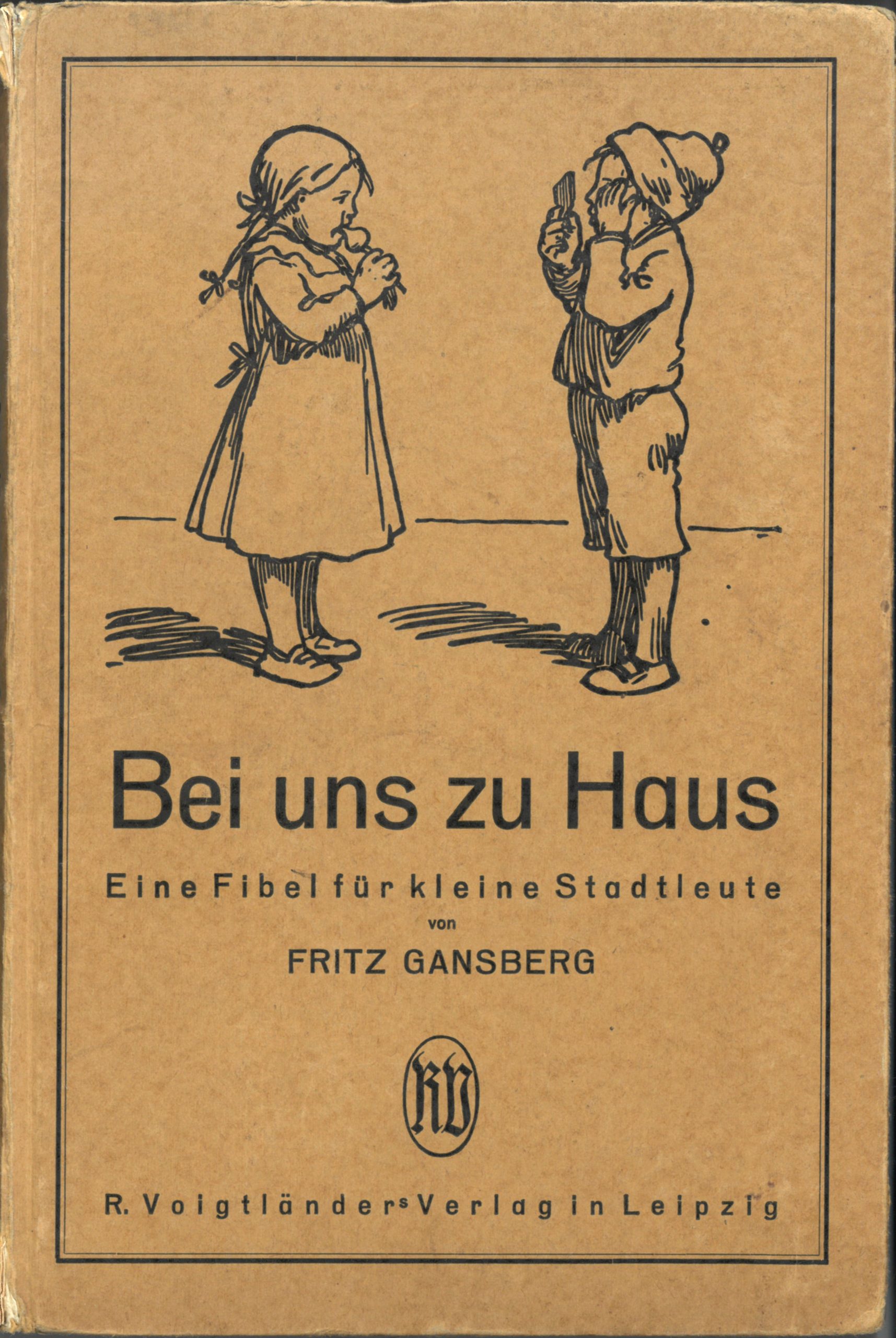
Fritz Gansberg: Bei uns zu Hause, Bremen, 1905
PRIMERS AS A PROPAGANDA TOOL – REWORKING BREMEN’S PRIMERS AFTER 1933
As a revision, the National Socialists used the Sütterlin script for writing lessons, which had been developed in 1911 and first used in lessons in Berlin to simplify writing. Ideologically charged with propaganda as a ‘German script’, it was introduced throughout the Reich by the Nazis in 1934. Accordingly, the Roland-Fibel (1935) and the Gansberg-Fibel (under the title ‘Meine Fibel’ in 1940) appeared in German font. This was not the only change to the primers under the Nazis – from 1935 onwards, the Roland-Fibel showed its propagandistic aims above all in the illustrations with children in Hitler Youth uniform and stories glorifying membership of the Hitler Youth (HJ and BDM). A portrait of Hitler on the first page of the first-reading primer showed the ‘Führer’ at the centre of a ‘happy German youth’.
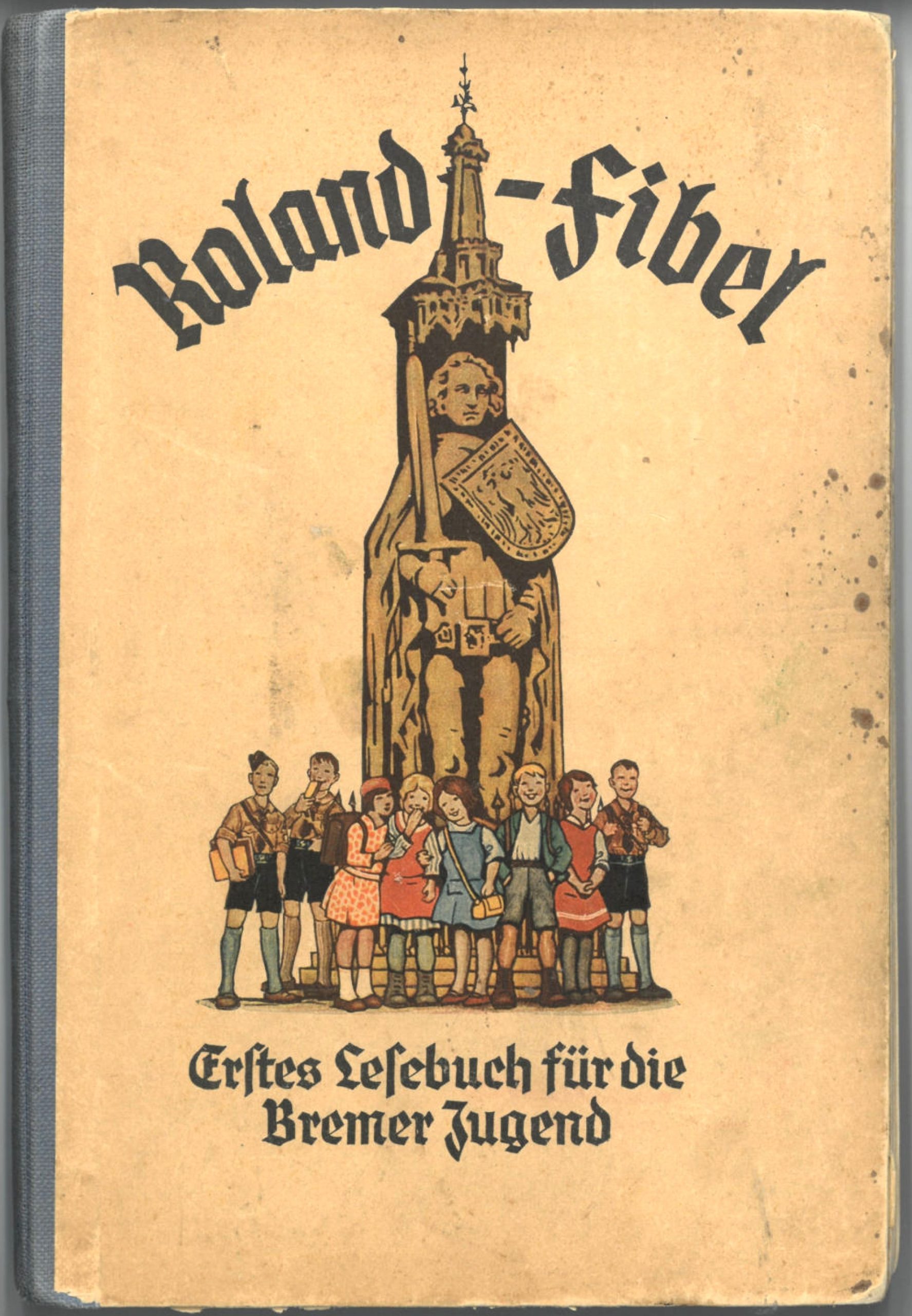
Ernst Kutzer: Roland-Fibel, Bremen, 1935
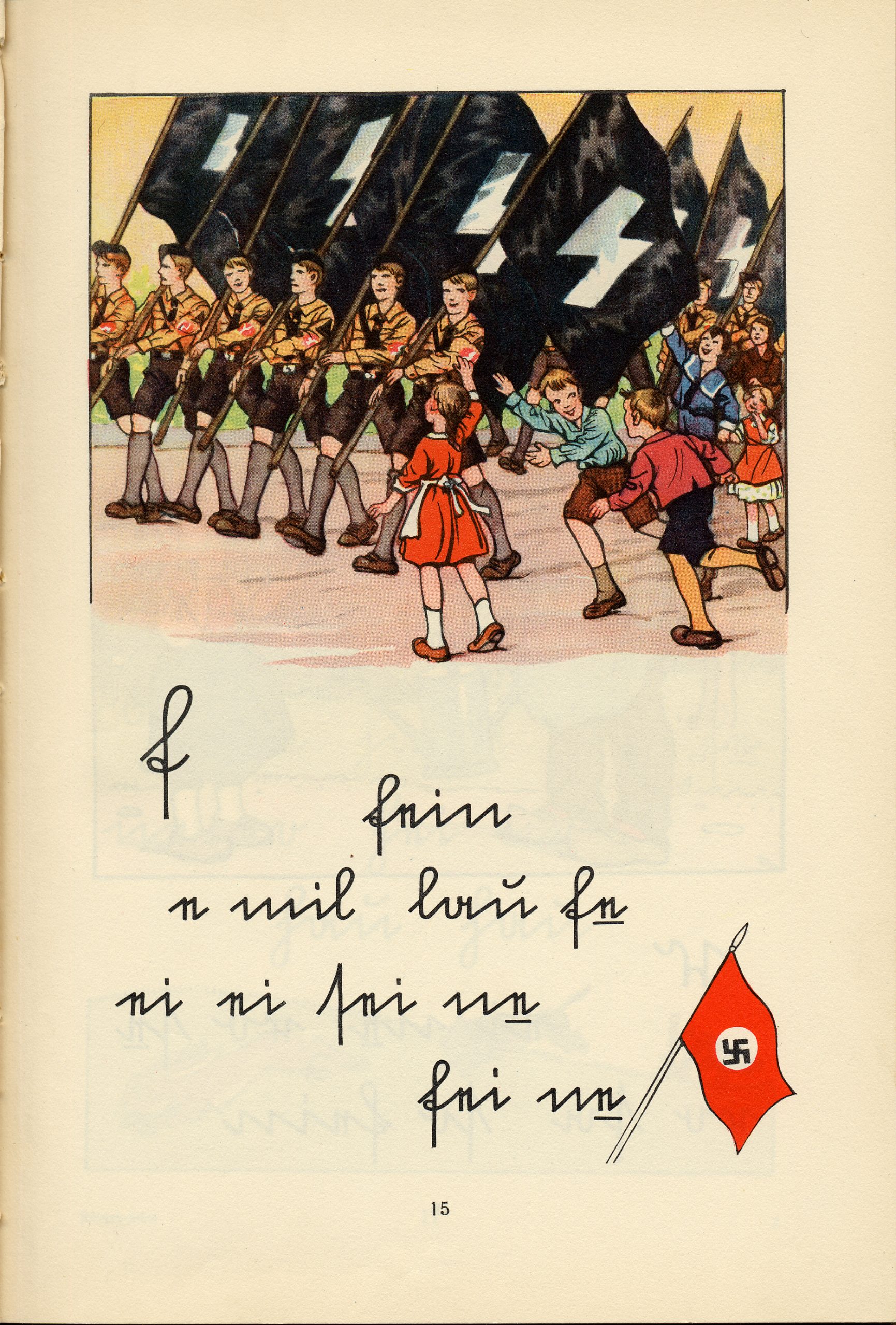
Ernst Kutzer: Roland-Fibel, Bremen, 1935
Ukraine
THE FIRST PRINTED PRIMER
Ivan Fedorov’s Primer (1574, Lviv) was divided into 2 parts: the alphabet and elements of grammar. The second part contains educational texts for reading and learning by heart, which was an absolute innovation in Ukrainian pedagogy of the 16th century. I. Fedorov was the first to try to introduce elements of grammar into primary literacy, in particular, patterns of verb conjugation in the present tense. Thus, Fedorov’s Primer went beyond the usual alphabet and was in great demand among Ukrainians.
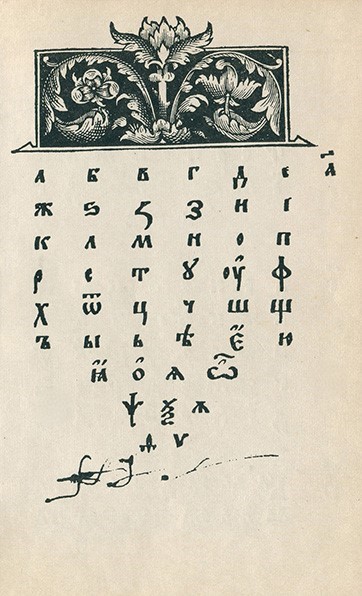
Ivan Fedorov: Bukvar, Lviv, 1574
PRIMERS OF THE EARLY 20TH CENTURY (BEFORE THE FIRST WORLD WAR)
The beginning of the 20th century in Ukraine’s history was a time of national revival. For the first time in Ukrainian culture’s history, the press and publishing activities developed rapidly. Most early twentieth-century Ukrainian primers had a clear national orientation, were well compiled from a methodological point of view, and largely met the interests of the Ukrainian child. An example of such a textbook is the Ukrainian Primer. Based on the textbook by O. Potebnya by Sofia Rusova.
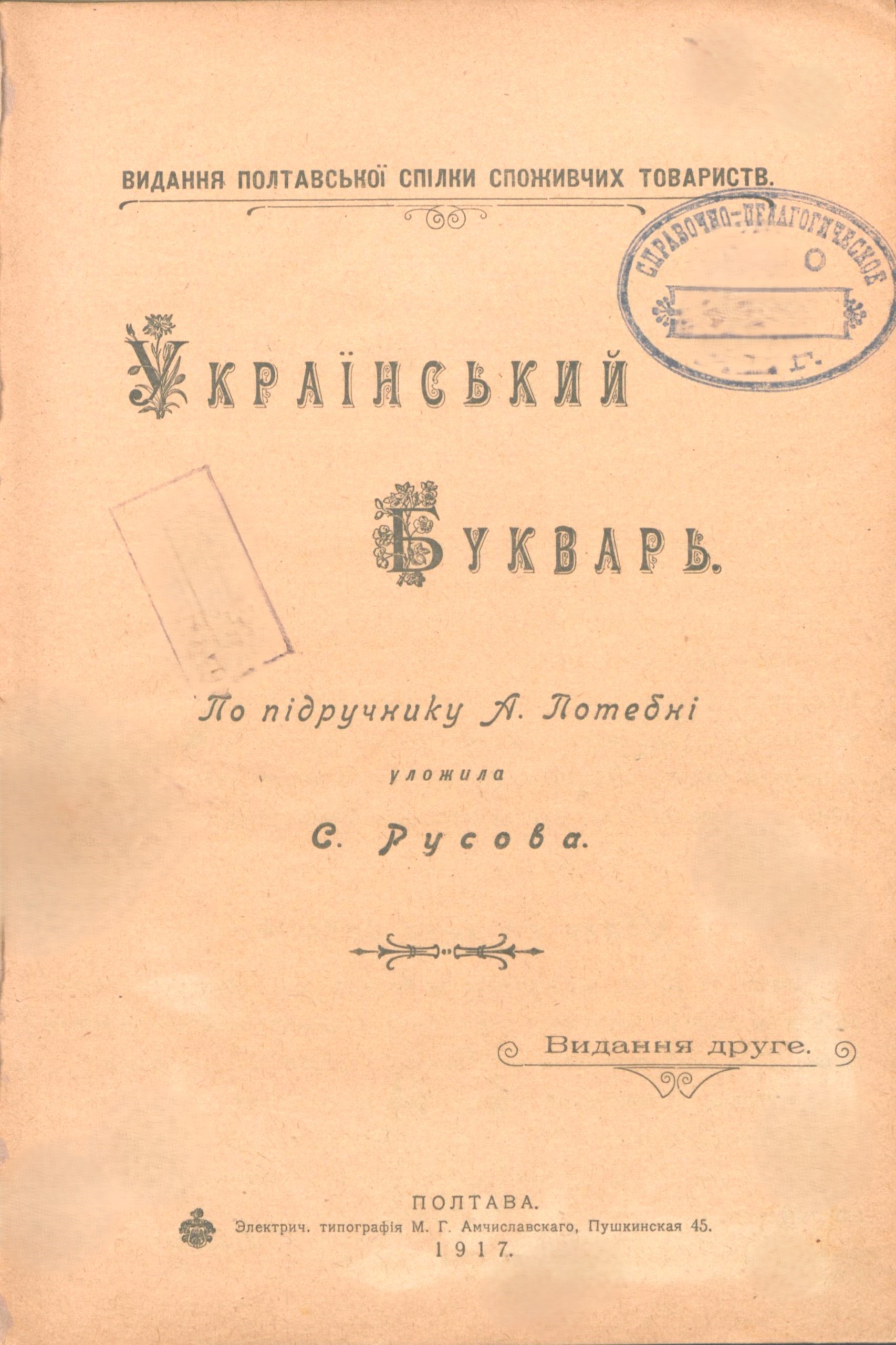
Sofia Rusova: Ukrainskij bukvar, Poltava, 1917
PRIMERS OF THE INTERWAR PERIOD (1920s-1930s)
The period of the 1920s and 1930s in the history of Ukrainian education is marked by ideological pressure, changes in education and teaching methods imposed by the Soviet government. There were few primers published at that time. Their artistic design was plain, with or without black-and-white illustrations. However, even under the conditions of the totalitarian regime, Ukrainian teachers tried to compile high-quality textbooks for younger students. A valuable publication of this period is the Primer by Vasyl Pomohaiba. The textbook has colorful illustrations to the texts, which was rare at the time.
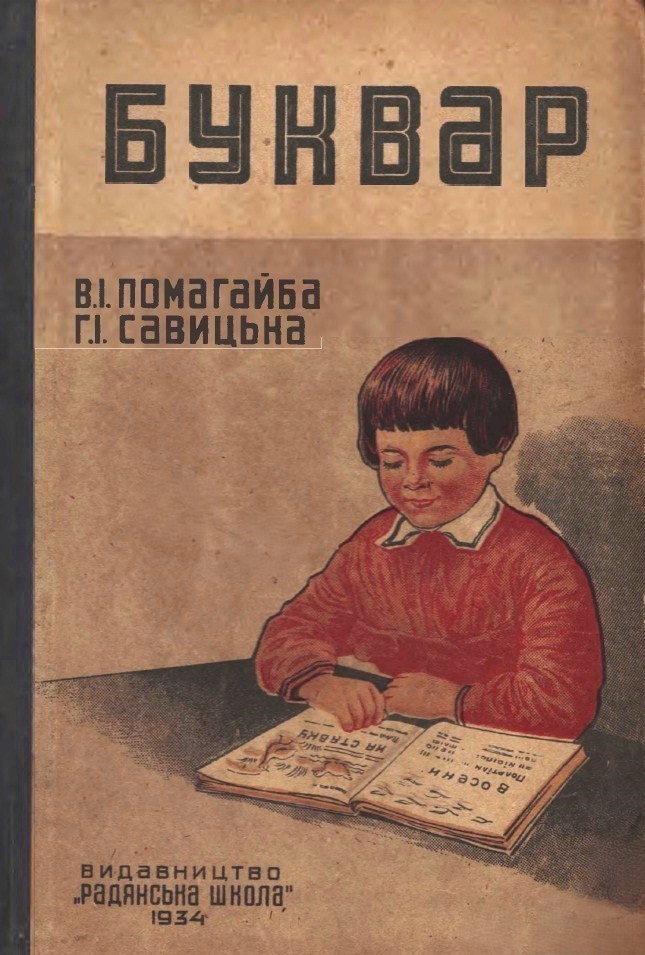
Vasyl Pomahayba, Hanna Savytska: Bukvar, Harkiv, 1934.
POSTWAR PRIMERS (1945-1970s)
This period is characterized by strict ideological control by the authorities aimed at spreading communist ideas and Soviet values, and systematic attempts to denationalize Ukrainian children. Primers became larger, began to be published in large editions, and featured color illustrations and improved methodological tools. Textbooks of this time were characterized by a large number of reprints. For example, the Primer by Nadiya Hoviadovska (Kyiv, 1960) was published 13 times (over 6.5 million copies) for 15 years. The Primer by Lydia Depolovych was also used during this period and was published 19 times (over 12.5 million copies) from 1938 to 1956.
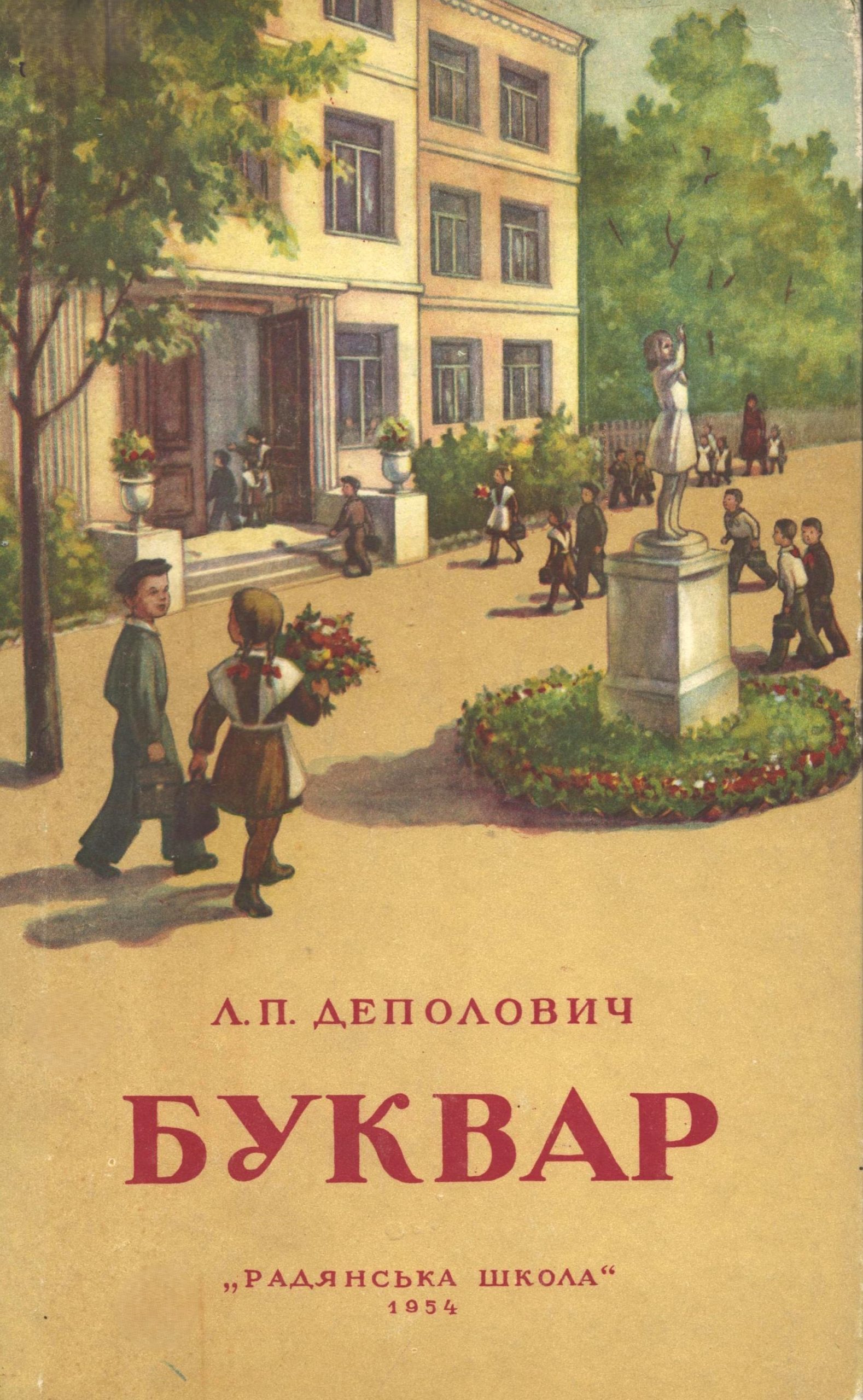
Lydia Depolovych: Bukvar, Kyiv, 1954
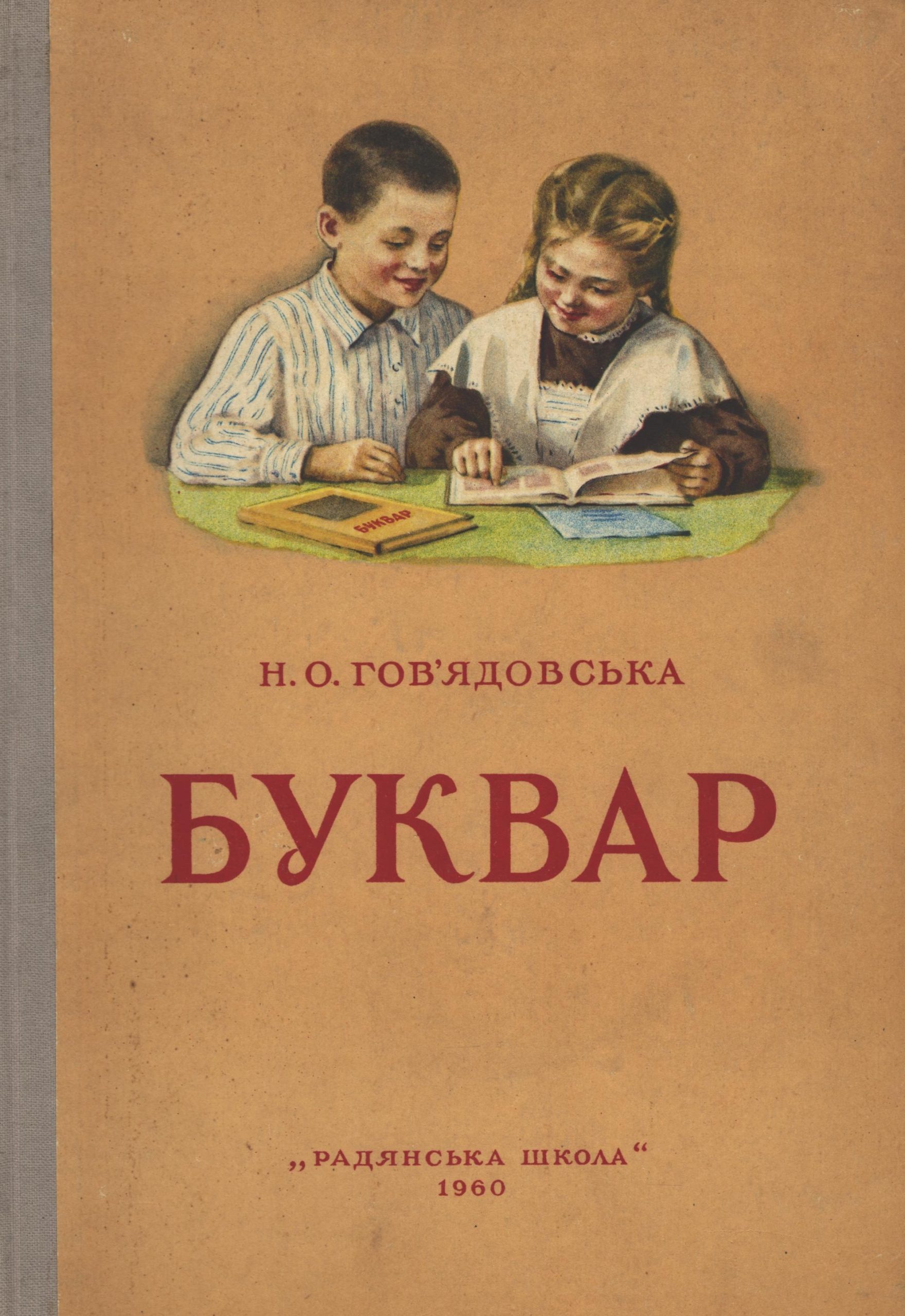
Nadiia Goviadovska: Bukvar, Kyiv, 1960
1980s – 1990s
Since the early 1990s, with the restoration of Ukraine’s independence, primers have been created based on the idea of forming a personality based on national and universal values. The textbooks contain the best examples of Ukrainian children’s literature. The texts for reading are full of national symbols, and the editions themselves are richly illustrated. The collection of the Pedagogical Museum includes modern Ukrainian primers by Mykola Vashulenko and Nadiia Skrypchenko.
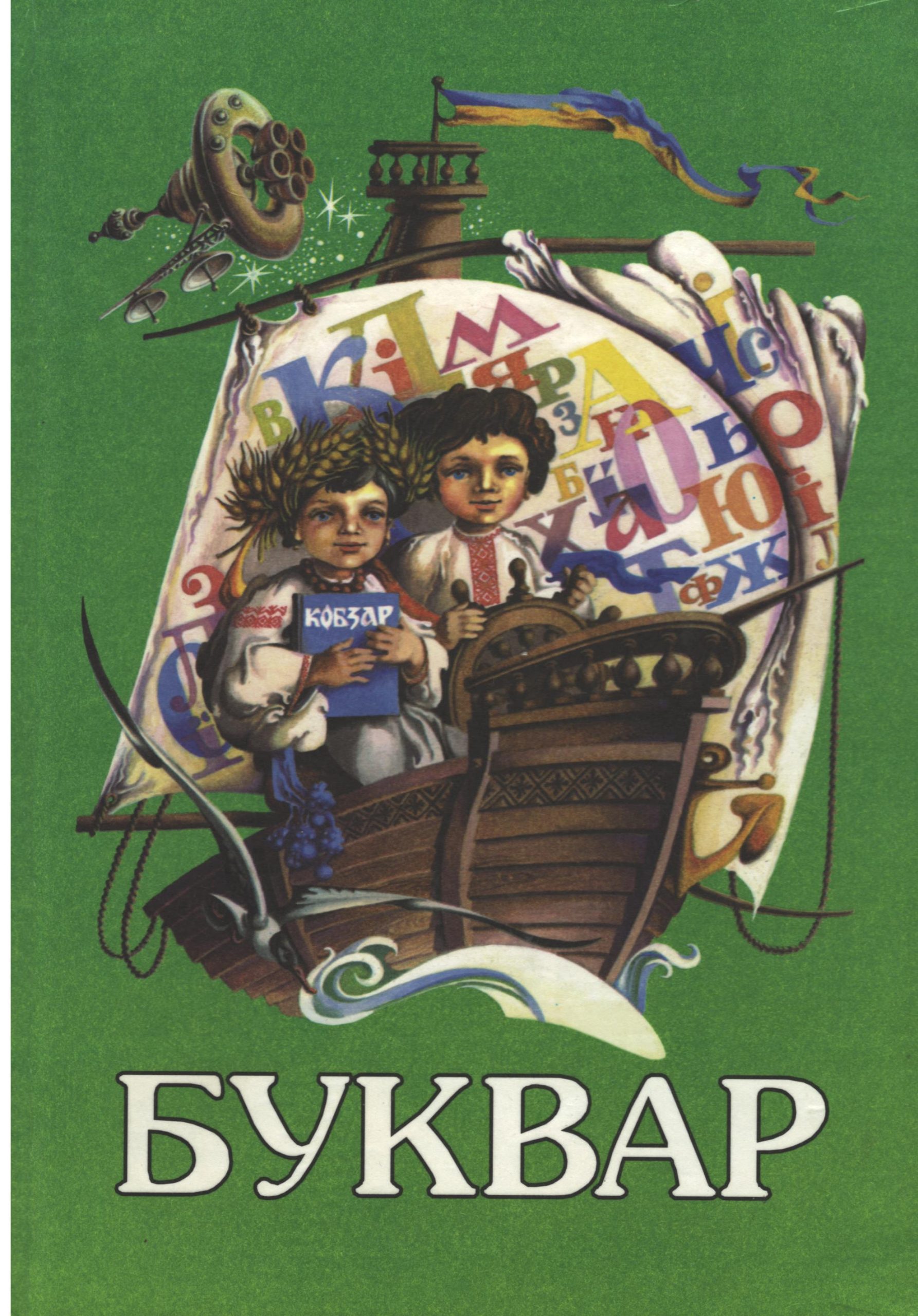
Nadiia Skrypchenko, Mykola Vashulenko: Bukvar, Kyiv, 1998
PRIMERS FOR CHILDREN WITH SPECIAL NEEDS
Primers for children with special educational needs appeared in Ukraine in the 1930s. It is important that even then, Ukrainian educators were developing teaching methods that were the precursors to the concept of inclusive education. Primer for Schools for Deaf Children (Kyiv, 1933) was a primer for teaching children with hearing and speech impairments; it had a large number of illustrations and taught sign language.
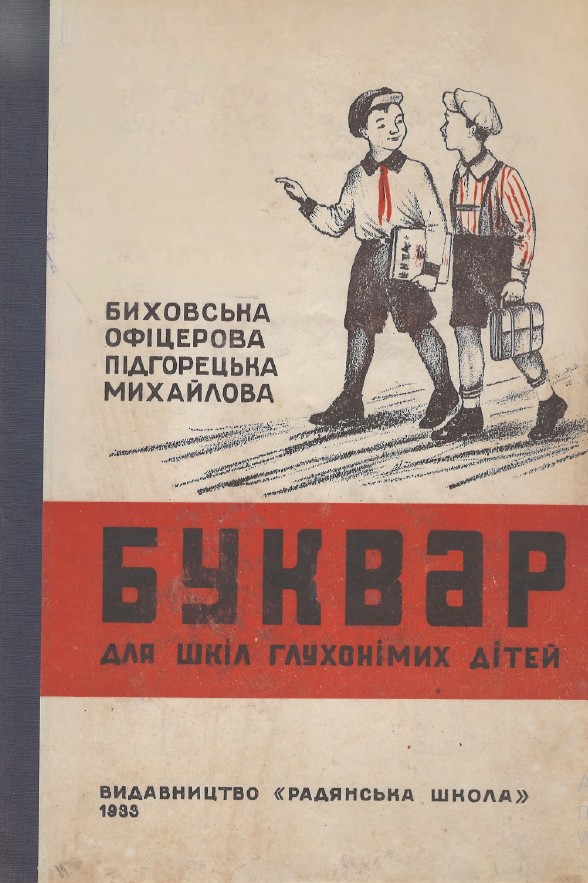
Bykhovska et al.: Bukvar dlja škil gluhonimih ditej, Kyiv, 1933
Estonia
THE FIRST ALPHABET BOOK
The first printed alphabet book is said to have been published by Bishop Joachim Jhering in 1641, following the example of the Swedish alphabet book.
The oldest surviving one is the Forselius alphabet book, printed in Riga in 1694. The reading section of the book is divided into three parts. In the first part, the letters are in large print and all the words are divided into syllables, with a short catechism at the end. The second part features short stories where the use of fonts in different sizes makes reading easier. In the third part, the text is no longer divided into syllables. The short stories, which are also suitable for adults, provide guidance for Christian living. A picture of a rooster adorns the last page. The original Forselius alphabet book is in now at the University of Lund, and a copy is in the University of Tartu Library.
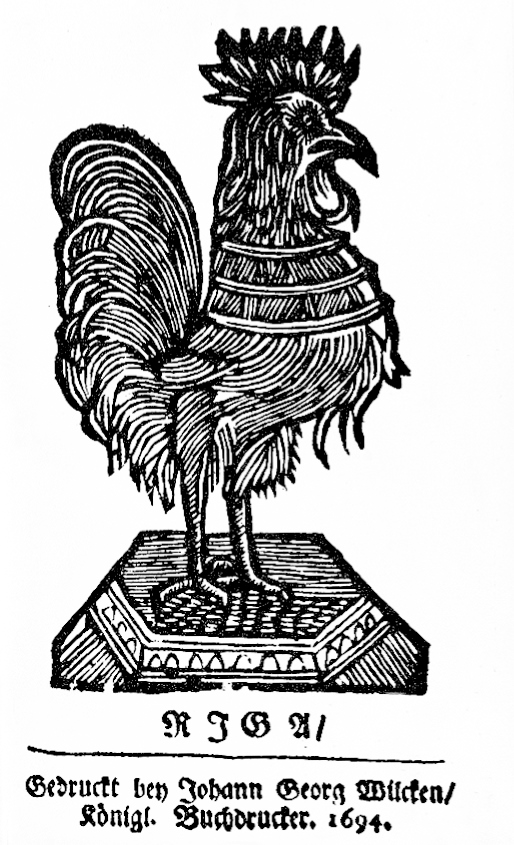
Bengt Gottfried Forselius: Aabits, Riga, 1694
THE FIRST PICTURES
The first illustration can be seen on the cover of the 1795 publication of O. W. Masing’s ABD ehk Luggemise-Ramat lastele (ABD – a Reading Book for Children). In a woodcut made by the author, a student stands in front of a schoolmaster in his home and demonstrates his knowledge. Whereas previously, the alphabet book also served as a tool for religious education, Masing’s alphabet book is primarily a tool for literacy. As a new theme, it includes pedagogical recommendations and guidelines to support teaching. Pictures associated with the text first appear in 1841 in Gehewe’s alphabet book Luggemisse Ramat laste kolitamisse tarvis (Reading Book for Children’s Education). Initially, illustrations are sparse and the images originate from the printing house’s stereotype collection.
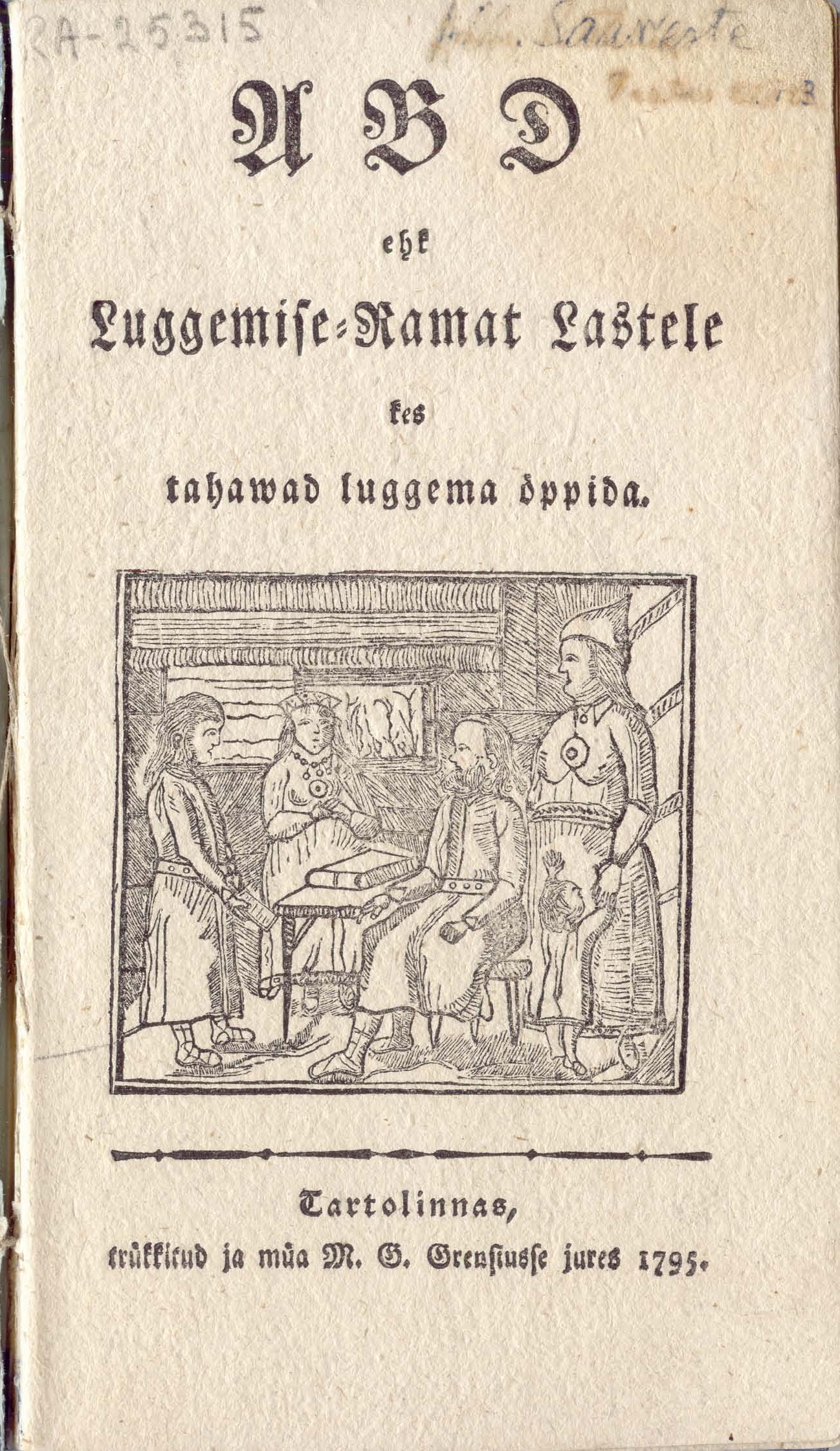
Otto Wilhelm Masing: ABD ehk Luggemise-Ramat Lastele kes tahawad luggema õppida, Tartu, 1795
NINETEENTH CENTURY – 1918
In the nineteenth century, as literacy became more common and new printing houses opened, the number of alphabet books grew rapidly. Towards the end of the century, alphabet books already include informative texts, alongside the works of the writers of the time. The short stories and pictures give some hints at the Tsarist state. In C. R. Jakobson’s Kooli Lugemise Raamat (Reading Book for School), published in 1867, the author stresses that learning to read should not be a long and arduous process, but that the child should learn with a cheerful mind and enthusiasm. Three key principles stand out when it comes to the creation of alphabet books – they need to be illustrative, accessible, and scientific. The alphabet book now provides a more complete worldview, teaching about things close to home as well as the world at large.
Jakobson’s alphabet book introduces the ancient culture of Estonians and explains how things are made and how they work. The illustrations depict rural life, showing the work and activities of farmers, while the stories reflect the everyday of farm children. The children are used to living in scarcity, they are happy with new clothes and keep them with care, and there is a curiosity and longing for city life. The alphabet books pay attention to correct posture, and the illustrations teach gymnastic exercises. The poems and images also relate to historical events of the time, such as the assassination of Emperor Alexander II in 1881. Towards the end of this period, the lyrics to the anthem of the future Republic of Estonia and a song praising the Russian emperor stand side by side.
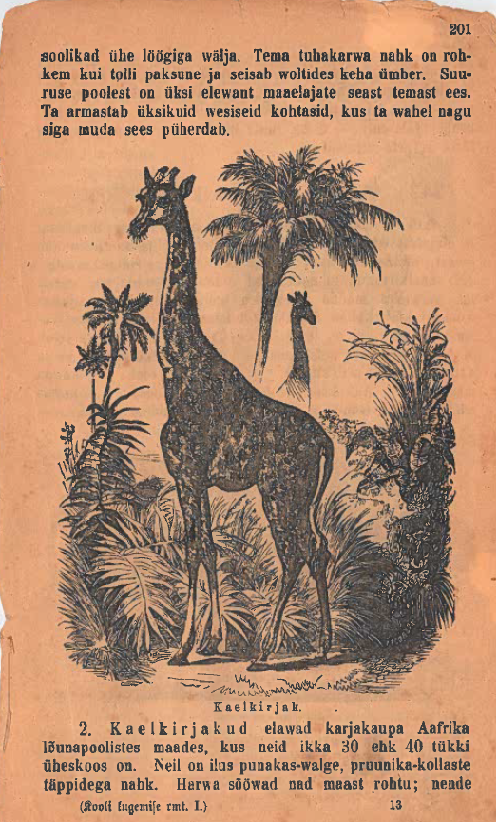
Carl Robert Jakobson: Kooli Lugemise Raamat, Tartu, 1867
1918–1940
The aim of the stories in alphabet books is to teach kindness, good manners, respect for others, health, and love for one’s country. The home is portrayed as an idyllic and safe place, and children have little to do with the outside world. One of the most popular reference books of the period is Tamman’s Huvitaja (1928), which is still considered useful during the occupations in 1941 and 1942. The texts show that children yearn for simple things – tasty food, new clothes – and these desires also appear in their dreams.
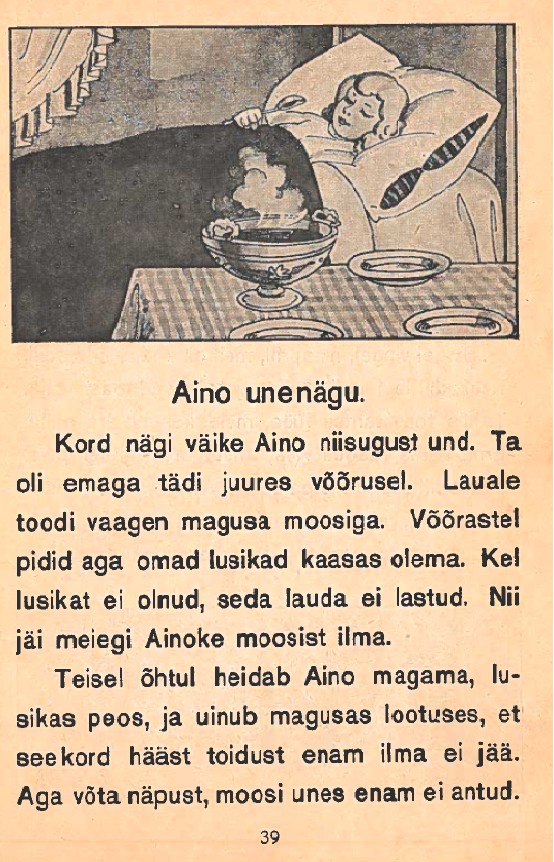
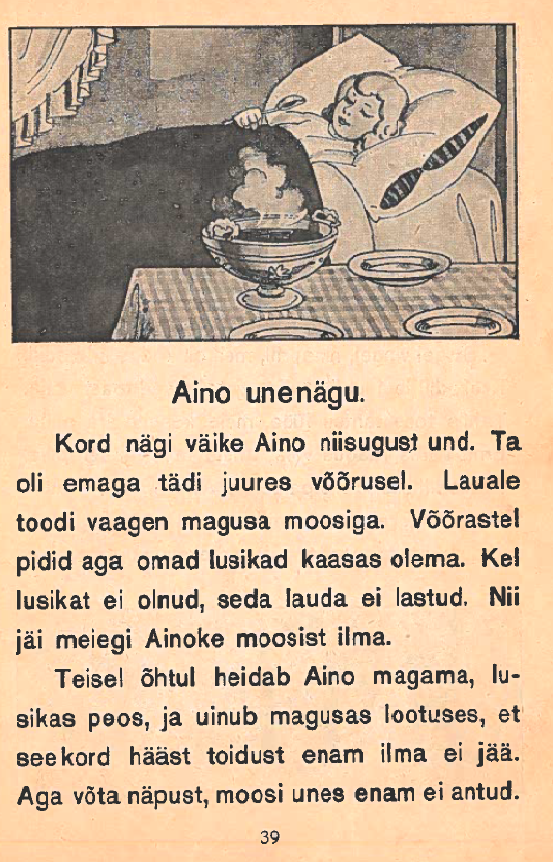
Voldemar Tamman: Huvitaja, Tartu, 1928
THE SOVIET PERIOD (1944 – 1986)
From 1945 to 1991, Estonia is under the rule of the Soviet Union. Even though the lessons are taught in Estonian, any pro-Estonian mindset is forbidden and alphabet books, too, must reflect the Soviet ideology. Already in the alphabet book for pre-school children, there is a story about an officer of the Soviet army. All pupils become members of a pro-Russian children’s organisation – the younger ones become Little Octobrists, the older ones Pioneers. In alphabet books, they are often seen doing things together. In the pictures of Vilma Parbo’s AB mudilastele (AB for Toddlers, 1970), gender roles are clearly divided. It is common to grow your own vegetables and fruits, and to involve children in the work. The young Lenin is shown as a studious role model for children. The last alphabet book containing pro-Russian ideology is published in 1985 (Kivi, Roosleht, Meister). It devotes several pages to the anniversary of the Great October Socialist Revolution.
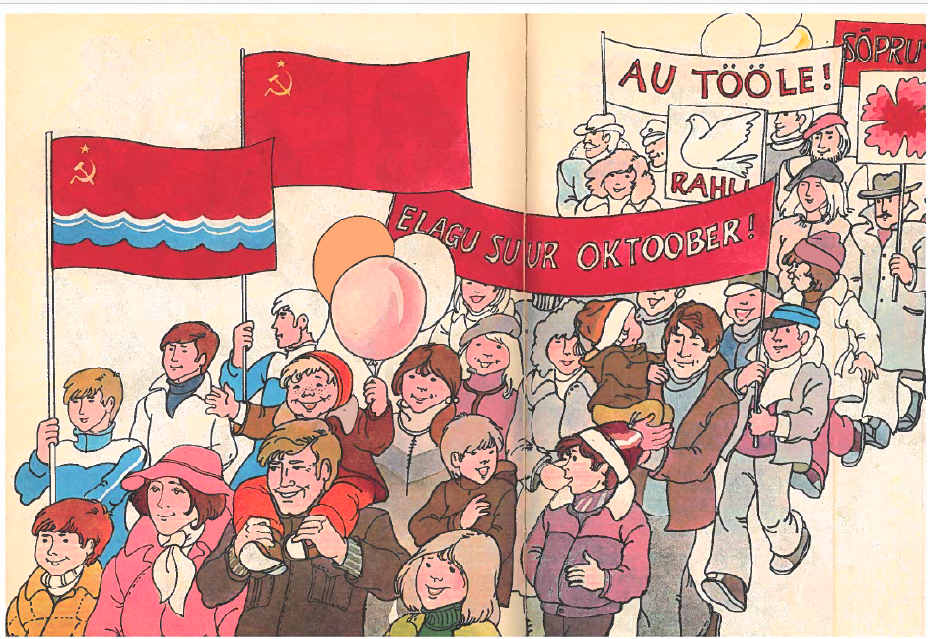
Lilian Kivi, Milvi Roosleht: Aabits, Talin, 1985
Years 1987–1991 lead to the restoration of Estonia’s independence. Alphabet books help to spread Estonian culture and support national self-awareness. During this period, the 1985 alphabet book by Lilian Kivi and Milvi Roosleht is in use, which changes from pro-Russian to pro-Estonian in its reprint.
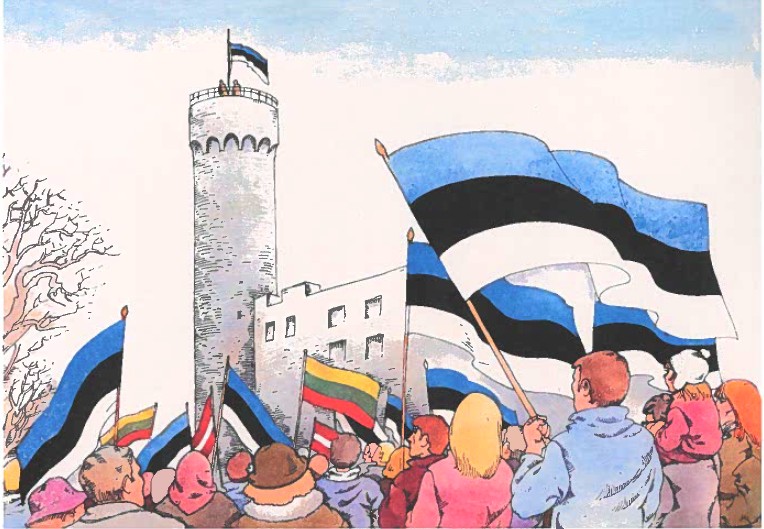
Lilian Kivi, Milvi Roosleht: Aabits, Talin, 1987
1991–TODAY
After the restoration of independence, alphabet books become even more nationally minded. The words to the anthem of the Republic of Estonia and the blue-black-and-white flag can be found in them. Reoccurring characters that accompany the child during the entire period of learning to read are also a newer theme in alphabet books. The most popular of them is the alphabet book by Ene Hiiepuu (1997), which features the little elves Anna and Aadam. Viivi Luik and Epp Maria Kokamägi, the authors of the first alphabet book published during the independence period (Meie aabits ja lugemik (Our Alphabet Book and Basal Reader), 1992), hope that the school, the teacher, and the education of people’s hearts will once again rise to an honourable position in Estonia. In this beautifully illustrated alphabet book, the roads to the whole world are open – journeys to far-off lands are described. The words ‘God’, ‘angel’, and ‘Christmas’ can be used again. The 2011 alphabet book already addresses the issue of excess consumption and the dangers of the internet. Some of the alphabet books published are not intended for use in school, but to support speaking a dialect or for free reading and brain games. For example, the Lapse spordiaabits (Children’s Sports Alphabet Book, 2023) encourages children to exercise more and eat healthily.
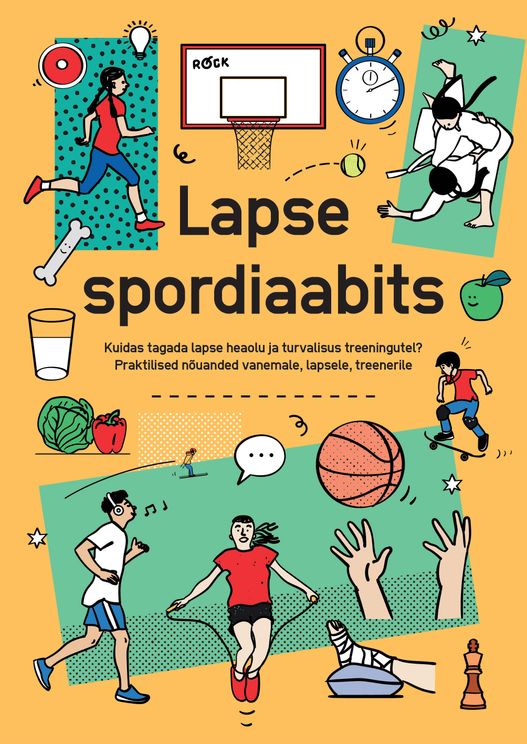
Tanel Tein, Tarmo Kink: Lapse spordiaabits, Tartu, 2023