Travelling exhibition
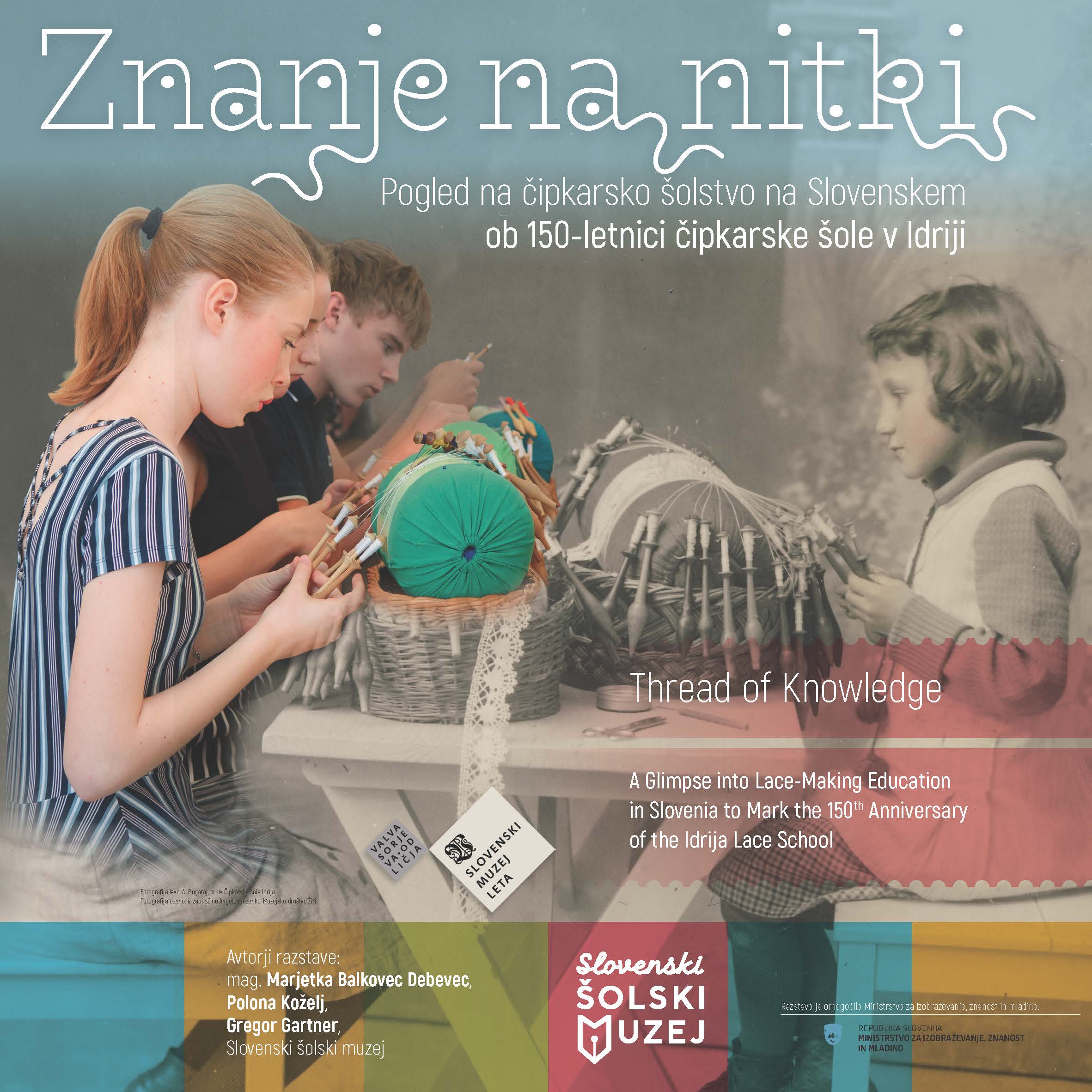
Thread of Knowledge
Thread of Knowledge
A Glimpse into Lace-Making Education in Slovenian Territory to Mark the 150th Anniversary of the Idrija Lace School
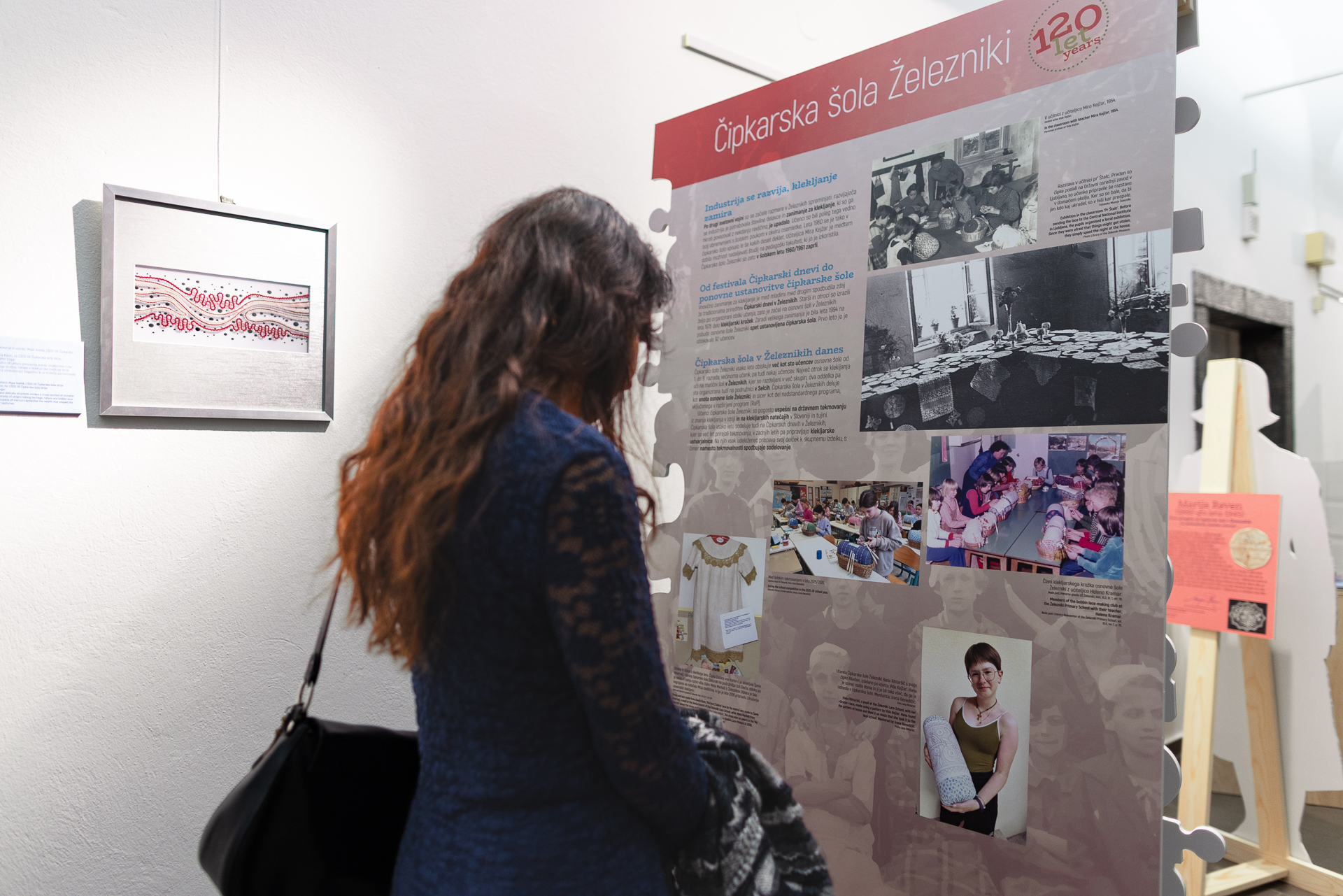
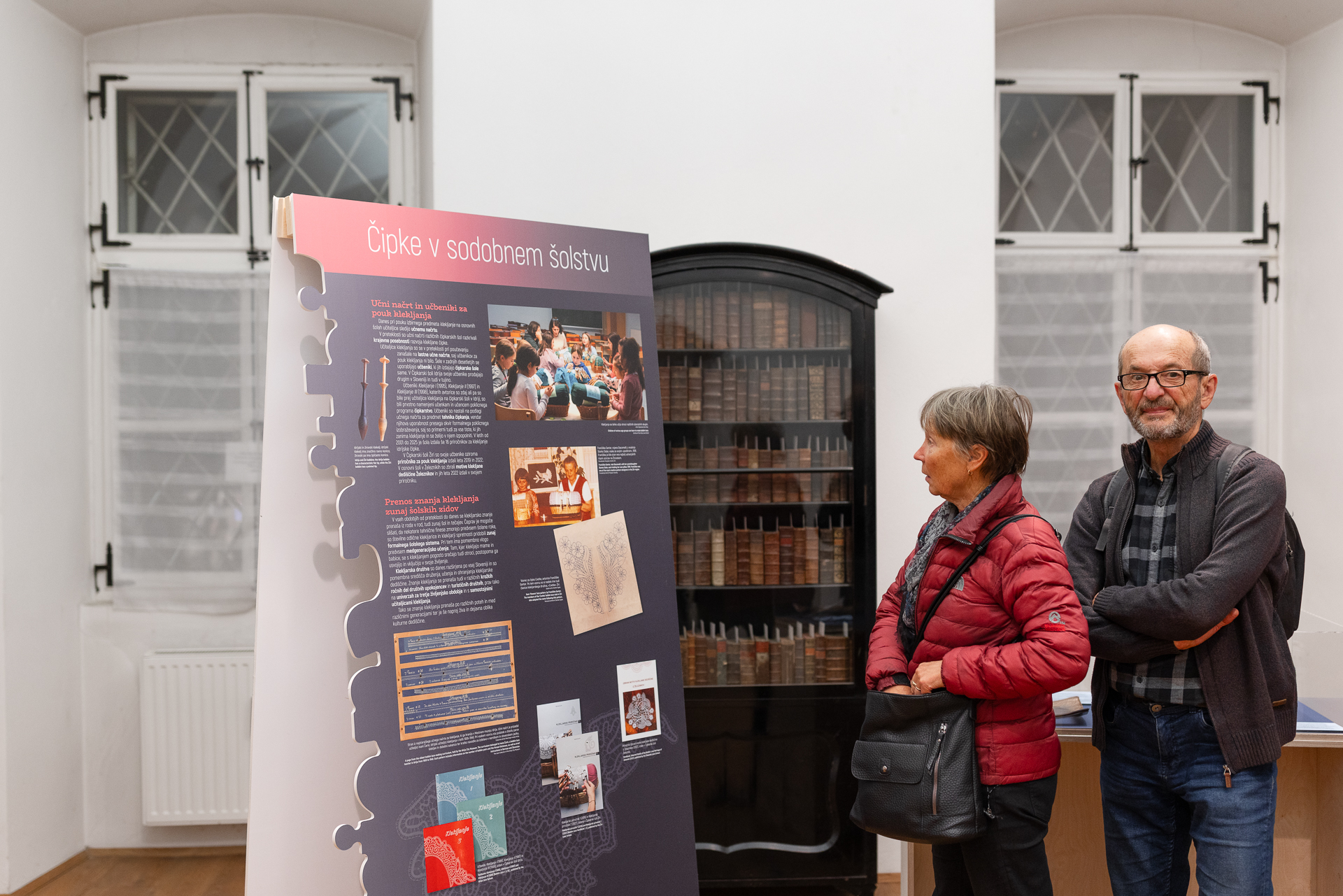
The exhibition aims to present the development of lace-making education in various locations in Slovenian territory as a single narrative, from its beginnings to the present day. Inspired by the 150th anniversary of the founding of the lace school in Idrija, the exhibition at the Slovenian School Museum provides an insight into lace-making education in Slovenian territory. It also marks the 130th anniversary of the establishment of the bobbin lace-making department at the Women’s School for Craft Lace-Making in Ljubljana, and the 120th anniversary of the lace schools in Žiri and Železniki. Through the exhibits, documents, photographs, and other artefacts, visitors can discover the stories of the students, teachers, and institutions that have played a key role in preserving and developing the heritage of lace-making.
This exhibition pays tribute to the generations of lace-makers, teachers, and artisans who have ensured that this art has been passed down through the centuries and remains firmly woven into the fabric of Slovenian culture.
The Slovenian School Museum also explored this theme in 2002 with the exhibition The Magic of Lace, which marked the 125th anniversary of the lace school in Idrija.
Exhibition Opening
The temporary exhibition opened on November 3, 2026.
Visiting the Exhibition
Location: Next to the atrium of the Ursuline Convent in Ljubljana—please check in at the reception desk of the Slovenian School Museum before entering.
When: From November 3, 2026, through the end of December 2026, Monday through Friday, from 10 a.m. to 3 p.m. For pre-registered groups, by prior arrangement.
Traveling Exhibition
The temporary exhibition *Knowledge on a Thread* is designed as a traveling exhibition and will tour various locations in Slovenia in 2027. If you would like the exhibition to visit your location, please email us at pr@solskimuzej.si.
Thread of Knowledge
The original title of the Thread of Knowledge exhibition contains several layers of meaning. Firstly, we want to emphasise the immense knowledge required to turn a delicate thread into intricately crafted lace. On the other hand, the art of lace-making has been under threat many times in the past, as if hanging by a thread. Many lace-making schools ceased to operate, but today we can observe a positive trend in this field. The title can also be understood more broadly, not just in the context of lace-making, and we can only hope that knowledge in our society will never hang by a thread.
Lace Is More Than Just a Decorative Item
Lace is an important part of cultural heritage, combining the knowledge, creativity, skill, and everyday life of many generations. In Slovenian territory, lace-making developed in various regions, each of them developing its own distinctive patterns, techniques, and traditions. With the rise of lace-making, there was a need for a more systematic approach to knowledge transfer, which led to the establishment of lace-making schools.
From Aristocratic Salons to School Desks
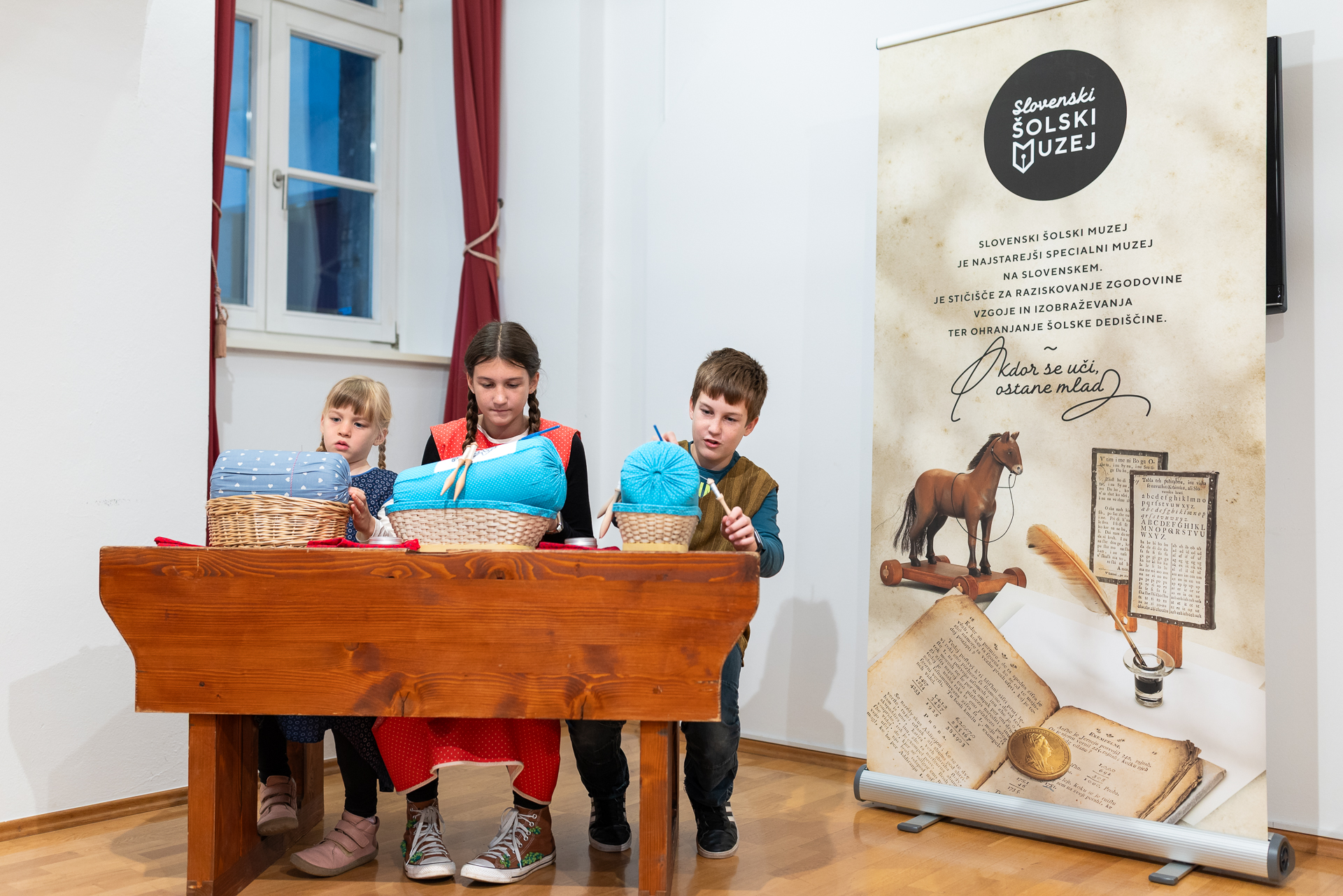
Originally, lace-making was a noble occupation. Gradually spreading from castles and monasteries, the art of bobbin lace-making became popular among burghers and peasants. The first organised lace-making school in what is now Slovenia operated in Ljubljana between 1763 and 1768. Teaching bobbin lace-making later spread through various forms of women’s handicrafts instruction. Idrija was an important centre, where a lace-making school was founded in 1876 and has remained in operation ever since. Other lace-making schools and courses were established in the late 19th and early 20th centuries, contributing significantly to the development of the local lace-making tradition. Of these, the lace-making schools in Žiri and Železniki remain operational today.
Between Tradition and Change
The significant political and social changes of the 20th century also impacted the organisation of lace-making education. Following the establishment of the Rapallo border, the development and administration of schools to the west and east of the border proceeded separately. Idrija and the Littoral hinterland came under the authority of Gorizia, Italy, while Ljubljana assumed a central role in the Kingdom of Serbs, Croats, and Slovenes. After World War II, as industry developed, interest in lace-making declined, resulting in the closure of numerous schools and courses. Interest in lace is currently rising again, and the goal remains the same as it was years ago: to preserve and pass on the art of bobbin lace-making. This mission is carried out by lace-making schools, clubs, festivals, societies, museums, and other cultural institutions.
Living Heritage for the Future
Bobbin lace-making is a living craft heritage and part of contemporary culture. Lace is not only found in traditional forms; it is also making its mark in design, fashion, architecture, and the visual arts. In 2018, Slovenian bobbin lace-making was inscribed on UNESCO’s Representative List of the Intangible Cultural Heritage of Humanity, confirming the exceptional cultural significance of bobbin lace-making in Slovenia.
Exhibition authors
Temporary travelling exhibition by the Slovenian School Museum. Exhibition opening: Slovenian School Museum, the Ursuline Convent in Ljubljana, 3 November 2026.
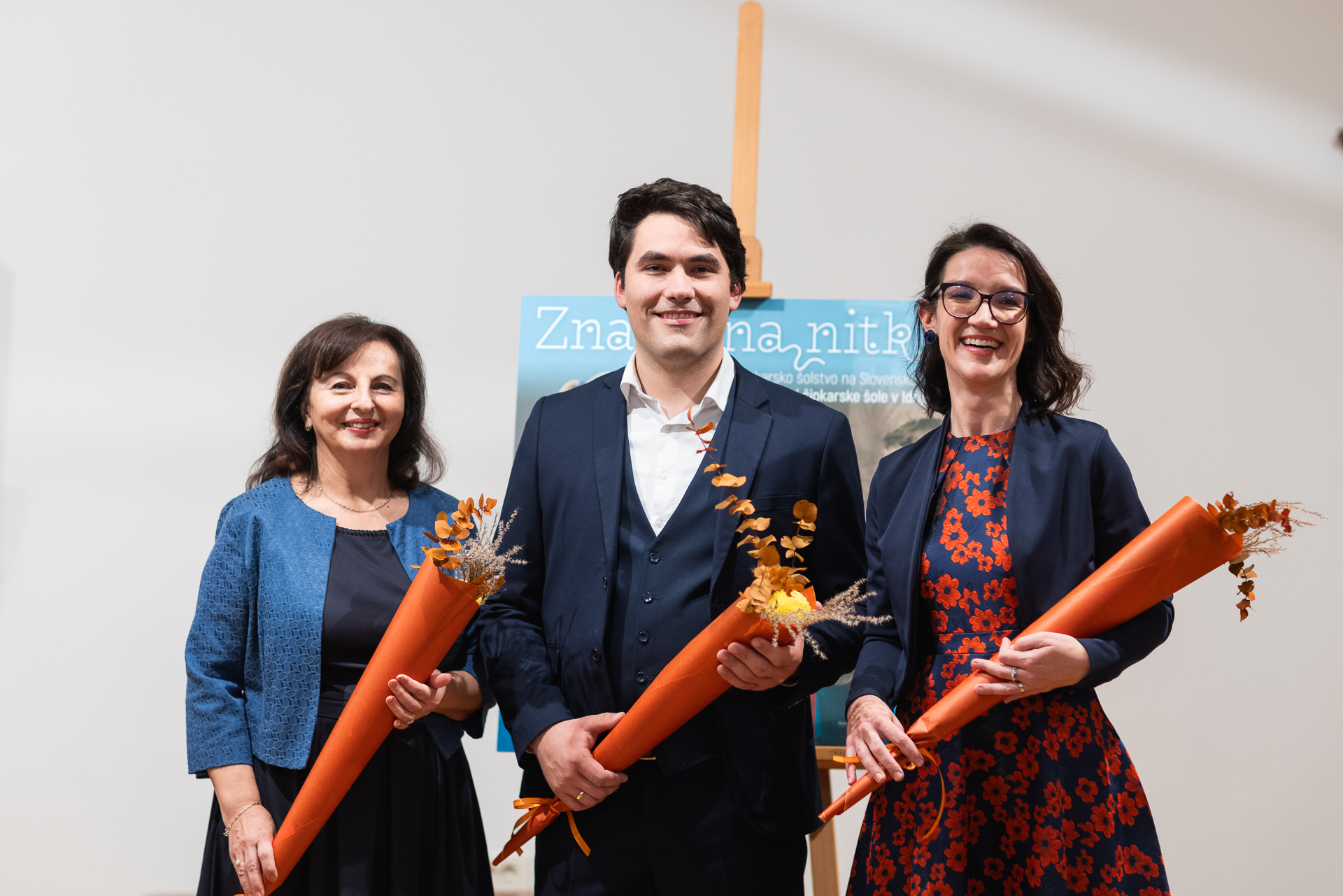
Exhibition authors: Mag Marjetka Balkovec Debevec, Polona Koželj, and Gregor Gartner, Slovenian School Museum
Exhibition organisation: Slovenian School Museum, represented by Mag Stane Okoliš
Exhibition and brochure design: Barbara Sirk and Žiga Okorn, uvid.si, d.o.o.
Language editing: Martina Oberman Žnidarčič
English translations of texts: Alenka Ropret
Exhibition promotion: Andreja Cigale, SŠM
Technical implementation: Preparation of objects: Franci Kadivec, SŠM, Production of panels and equipment: O.K.VIR, d.o.o., Printing of invitations and brochures: Camera, d.o.o.
We would like to thank the Idrija Municipal Museum, the lace-making schools, the other museums and archives, and the individuals who contributed to the preparation of this exhibition.
The exhibition was made possible by the Ministry of Education, Science, and Youth