Culture is Close!
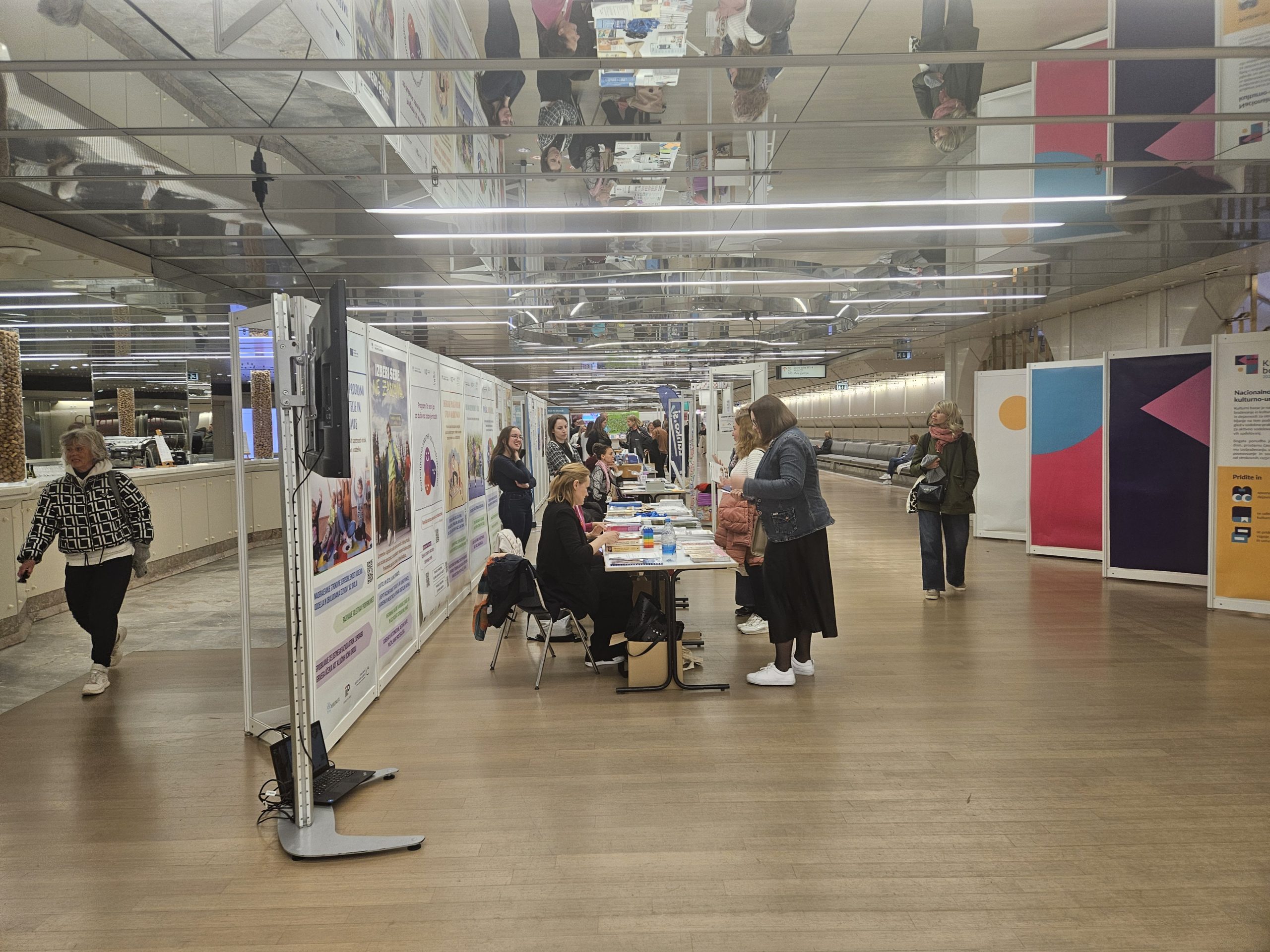
On 1 April 2026, the Cultural Bazaar at Cankarjev Dom brought together cultural and educational institutions under the central theme of accessibility. The programme of the largest professional training event in cultural and arts education included a wide variety of events: lectures, presentations, round tables, workshops, performances, film screenings and guided tours of the exhibition.
The Slovenian School Museum was an active participant in the Cultural Bazaar programme. The museum content coordinator was our curator, Mateja Pušnik.
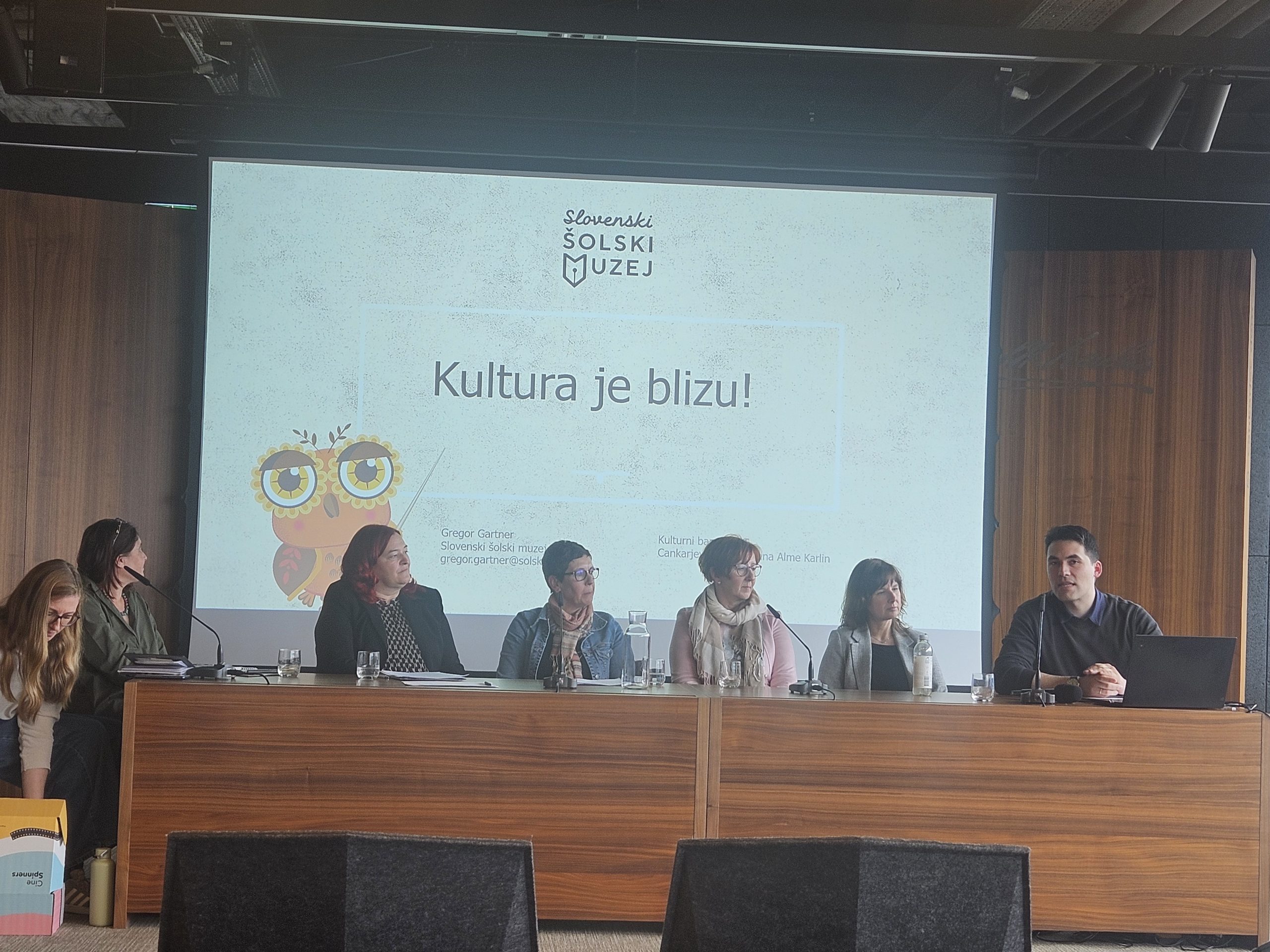
Curator Gregor Gartner explored the theme of cultural accessibility in remote areas alongside panellists at a roundtable discussion titled ‘Culture Is Close!’ Through discussion and examples of good practice, the panellists assessed the level of cultural accessibility in areas far from major cultural centres, identifying the challenges and opportunities faced by schools, communities and associations in providing cultural content. Representatives of cultural institutions presented ways in which they can engage with schools, such as visiting smaller schools.
The panel discussion, which was moderated by Gregor Gartner, was attended by:
- Vanja Kačič and Aleksandra Kričej, Koroški Jeklarji Primary School, Kotlje School Branch
- Lidija Ličen, Slovenska Bistrica Secondary School
- Manca Perko, Slovenian Reading Badge Society – ZPMS
- Lučka Berlot, Domžale City Cinema
- Mojca Horvat, Maribor Regional Archives
The aim of the roundtable was to share experiences and ideas as well as to promote networking.
Organised by the Ministry of Culture, the Ministry of Education, the National Education Institute and Cankarjev Dom, the event addressed accessibility from geographical, sensory, spatial, social and economic perspectives. Particular attention was also paid to including vulnerable groups, participatory programmes and ensuring communication and digital accessibility. The challenges faced by cultural institutions and creators, as well as educational institutions, were highlighted, good practices were presented and new proposals for developing an even more accessible and inclusive cultural landscape were presented.